This is a reprint from an article on a local parish, dedicated pro-life news site, “Presentation Right to Life” (presentation-r2l.org), posted on July 31, 2016.
Summary: Nobody should be careless about getting Zika. But allowing a panic to deflect attention from the most important issues is no help either.
These are Microcephaly Kids. Their Moms probably didn’t have Zika.
As you can see, they’re terrific people. I want to be with them.
If God were to send me one, I would probably learn to “wag more, bark less” from them.
The most highly regarded American reporter, Sharyl Attkisson, reports that while Zika has been associated with increased incidences of microcephaly births, there is little evidence that the Zika infection itself directly causes the microcephaly birth defect. An insecticide that people were drinking may be the cause.
For 70 years, Zika wasn’t linked to microcephaly birth defects. The link was made only after a 2015 rise in microcephaly in Brazil coincident with a Zika outbreak.
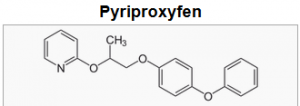
An Argentina doctors’ group said Brazil’s rash of microcephaly was noticed shortly after some communities began using the larvicide Pyriproxyfen in drinking water. It’s a hypothesis, a probability, Dr. Medardo Avila Vazquez, a pediatrician in Cordoba, Argentina and main author of the report told NPR. And for us, its more likely that it’s the chemical larvicide and not Zika. After the report by the Argentina doctors, one Brazilian state announced it would stop putting Pyriproxyfen in drinking water. (Common pesticide may have made the Zika epidemic worse – new research.)
Zika is considered one of the mildest mosquito-borne viruses. More than 80% of people who get Zika don’t become sick and have no symptoms.
The image below is repeated in most Zika stories. It conveys a sense of suffering. The viewer is probably unaware that the placement of the image in the stories unconsciously links fears of having imperfect children with the crying and sense of suffering.
A perfect, beautiful child crying would convey a very different “left brain” message.
This shortlink
https://www.sing-prayer.org/p/11948
Adoro te devote, latens Deitas,
Quæ sub his figuris vere latitas;
Tibi se cor meum totum subjicit,
Quia te contemplans totum deficit.
Godhead here in hiding, whom I do adore,
Masked by these bare shadows, shape and nothing more,
See, Lord, at Thy service low lies here a heart
Lost, all lost in wonder at the God thou art.
Visus, tactus, gustus in te fallitur,
Sed auditu solo tuto creditur.
Credo quidquid dixit Dei Filius;
Nil hoc verbo veritátis verius.
Seeing, touching, tasting are in thee deceived:
How says trusty hearing? that shall be believed;
What God’s Son has told me, take for truth I do;
Truth Himself speaks truly or there’s nothing true.
In cruce latebat sola Deitas,
At hic latet simul et Humanitas,
Ambo tamen credens atque confitens,
Peto quod petivit latro pœnitens.
On the cross Thy godhead made no sign to men,
Here Thy very manhood steals from human ken:
Both are my confession, both are my belief,
And I pray the prayer of the dying thief.
Plagas, sicut Thomas, non intueor:
Deum tamen meum te confiteor.
Fac me tibi semper magis credere,
In te spem habere, te diligere.
I am not like Thomas, wounds I cannot see,
But can plainly call thee Lord and God as he;
Let me to a deeper faith daily nearer move,
Daily make me harder hope and dearer love.
O memoriale mortis Domini!
Panis vivus, vitam præstans homini!
Præsta meæ menti de te vívere,
Et te illi semper dulce sapere.
O thou our reminder of Christ crucified,
Living Bread, the life of us for whom he died,
Lend this life to me then: feed and feast my mind,
There be thou the sweetness man was meant to find.
Pie Pelicane, Jesu Domine,
Me immundum munda tuo sanguine:
Cujus una stilla salvum facere
Totum mundum quit ab omni scelere.
Bring the tender tale true of the Pelican;
Bathe me, Jesu Lord, in what Thy bosom ran
Blood whereof a single drop has power to win
All the world forgiveness of its world of sin.
Jesu, quem velatum nunc aspicio,
Oro, fiat illud quod tam sitio:
Ut te revelata cernens facie,
Visu sim beátus tuæ gloriæ. Amen
Jesu, whom I look at shrouded here below,
I beseech thee send me what I thirst for so,
Some day to gaze on thee face to face in light
And be blest for ever with Thy glory’s sight. Amen.
This shortlink
https://www.sing-prayer.org/p/11364
“When I was a child, I spoke as a child, I understood as a child, I thought as a child. But, when I became a man, I put away the things of a child.” First Corinthians 13:11
We are bound on Sunday to abstain from servile work and to assist at the public Mass; we ought moreover to employ this day in providing for the salvation of our soul, that is to say by approaching the Sacraments, by prayer, hearing sermons, reading spiritual books, and performing works of mercy.
A most profitable form of “reading spiritual books” is to continue thoroughly studying our catechism.

Fr. Sommerville composed a number of musically and devotionally excellent hymns carried in The Traditional Roman Hymnal.
Dear Fellow Catholics in the Roman Rite,
1 – I am a priest who for over ten years collaborated in a work that became a notable harm to the Catholic Faith. I wish now to apologize before God and the Church and to renounce decisively my personal sharing in that damaging project. I am speaking of the official work of translating the new post-Vatican II Latin liturgy into the English language, when I was a member of the Advisory Board of the International Commission on English Liturgy (I.C.E.L.).
2 – I am a priest of the Archdiocese of Toronto, Canada, ordained in 1956. Fascinated by the Liturgy from early youth, I was singled out in 1964 to represent Canada on the newly constituted I.C.E.L. as a member of the Advisory Board. At 33 its youngest member, and awkwardly aware of my shortcomings in liturgiology and related disciplines, I soon felt perplexity before the bold mistranslations confidently proposed and pressed by the everstrengthening radical/progressive element in our group. I felt but could not articulate the wrongness of so many of our committee’s renderings.
3 – Let me illustrate briefly with a few examples. To the frequent greeting by the priest, The Lord be with you, the people traditionally answered, and with your (Thy) spirit: in Latin, Et cum spiritu tuo. But I.C.E.L. rewrote the answer: And also with you. This, besides having an overall trite sound, has added a redundant word, also. Worse, it has suppressed the word spirit which reminds us that we human beings have a spiritual soul. Furthermore, it has stopped the echo of four (inspired) uses of with your spirit in St. Paul’s letters.
4 – In the I confess of the penitential rite, I.C.E.L. eliminated the threefold through my fault, through my fault, through my most grievous fault, and substituted one feeble through my own fault. This is another nail in the coffin of the sense of sin.
5 – Before Communion, we pray Lord I am not worthy that thou shouldst (you should) enter under my roof. I.C.E.L. changed this to … not worthy to receive you. We loose the roof metaphor, clear echo of the Gospel (Matth. 8:8), and a vivid, concrete image for a child.
6 – I.C.E.L.’s changes amounted to true devastation especially in the oration prayers of the Mass. The Collect or Opening Prayer for Ordinary Sunday 21 will exemplify the damage. The Latin prayer, strictly translated, runs thus: O God, who make the minds of the faithful to be of one will, grant to your peoples (grace) to love that which you command and to desire that which you promise, so that, amidst worldly variety, our hearts may there be fixed where true joys are found.
7 – Here is the I.C.E.L. version, in use since 1973: Father, help us to seek the values that will bring us lasting joy in this changing world. In our desire for what you promise, make us one in mind and heart.
8 – Now a few comments: To call God Father is not customary in the Liturgy, except Our Father in the Lord’s prayer. Help us to seek implies that we could do this alone (Pelagian heresy) but would like some aid from God. Jesus teaches, without Me you can do nothing. The Latin prays grant (to us), not just help us. I.C.E.L.’s values suggests that secular buzzword, “values” that are currently popular, or politically correct, or changing from person to person, place to place. Lasting joy in this changing world, is impossible. In our desire presumes we already have the desire, but the Latin humbly prays for this. What you promise omits “what you (God) command”, thus weakening our sense of duty. Make us one in mind (and heart) is a new sentence, and appears as the main petition, yet not in coherence with what went before. The Latin rather teaches that uniting our minds is a constant work of God, to be achieved by our pondering his commandments and promises. Clearly, I.C.E.L. has written a new prayer. Does all this criticism matter? Profoundly! The Liturgy is our law of praying (lex orandi), and it forms our law of believing (lex credendi). If I.C.E.L. has changed our liturgy, it will change our faith. We see signs of this change and loss of faith all around us.
9 – The foregoing instances of weakening the Latin Catholic Liturgy prayers must suffice. There are certainly THOUSANDS OF MISTRANSLATIONS in the accumulated work of I.C.E.L. As the work progressed I became a more and more articulate critic. My term of office on the Advisory Board ended voluntarily about 1973, and I was named Member Emeritus and Consultant. As of this writing I renounce any lingering reality of this status.
10 – The I.C.E.L. labours were far from being all negative. I remember with appreciation the rich brotherly sharing, the growing fund of church knowledge, the Catholic presence in Rome and London and elswhere, the assisting at a day-session of Vatican II Council, the encounters with distinguished Christian personalities, and more besides. I gratefully acknowledge two fellow members of I.C.E.L. who saw then, so much more clearly than I, the right translating way to follow: the late Professor Herbert Finberg, and Fr. James Quinn S.J. of Edinburgh. Not for these positive features and persons do I renounce my I.C.E.L. past, but for the corrosion of Catholic Faith and of reverence to which I.C.E.L.’s work has contributed. And for this corrosion, however slight my personal part in it, I humbly and sincerely apologize to God and to Holy Church.
11 – Having just mentioned in passing the Second Vatican Council (1962-1965), I now come to identify my other reason for renouncing my translating work on I.C.E.L. It is an even more serious and delicate matter. In the past year (from mid 2001), I have come to know with respect and admiration many traditional Catholics. These, being persons who have decided to return to pre-Vatican II Catholic Mass and Liturgy, and being distinct from “conservative” Catholics (those trying to retouch and improve the Novus Ordo Mass and Sacraments of post-Vatican II), these Traditionals, I say, have taught me a grave lesson. They brought to me a large number of published books and essays. These demonstrated cumulatively, in both scholarly and popular fashion, that the Second Vatican Council was early commandeered and manipulated and infected by modernist, liberalist, and protestantizing persons and ideas. These writings show further that the new liturgy produced by the Vatican “Concilium” group, under the late Archbishop A. Bugnini, was similarly infected. Especially the New Mass is problematic. It waters down the doctrine that the Eucharist is a true Sacrifice, not just a memorial. It weakens the truth of the Real Presence of Christ’s victim Body and Blood by demoting the Tabernacle to a corner, by reduced signs of reverence around the Consecration, by giving Communion in the hand, often of women, by cheapering the sacred vessels, by having used six Protestant experts (who disbelieve the Real Presence) in the preparation of the new rite, by encouraging the use of sacro-pop music with guitars, instead of Gregorian chant, and by still further novelties.
12 – Such a litany of defects suggests that many modern Masses are sacrilegious, and some could well be invalid. They certainly are less Catholic, and less apt to sustain Catholic Faith.
13 – Who are the authors of these published critiques of the Conciliar Church? Of the many names, let a few be noted as articulate, sober evaluators of the Council: Atila Sinka Guimaeres (In the Murky Waters of Vatican II), Romano Amerio (Iota Unum: A Study of the Changes in the Catholic Church in the 20th Century), Michael Davies (various books and booklets, TAN Books), and Archbishop Marcel Lefebvre, one the Council Fathers, who worked on the preparatory schemas for discussions, and has written many readable essays on Council and Mass (cf Angelus Press).
14 – Among traditional Catholics, the late Archbishop Lefebvre stands out because he founded the Society of St Pius X (SSPX), a strong society of priests (including six seminaries to date) for the celebration of the traditional Catholic liturgy. Many Catholics who are aware of this may share the opinion that he was excommunicated and that his followers are in schism. There are however solid authorities (including Cardinal Ratzinger, the top theologian in the Vatican) who hold that this is not so. SSPX declares itself fully Roman Catholic, recognizing Pope John Paul II while respectfully maintaining certain serious reservations.
15 – I thank the kindly reader for persevering with me thus far. Let it be clear that it is FOR THE FAITH that I am renouncing my association with I.C.E.L. and the changes in the Liturgy. It is FOR THE FAITH that one must recover Catholic liturgical tradition. It is not a matter of mere nostalgia or recoiling before bad taste.
16 – Dear non-traditional Catholic Reader, do not lightly put aside this letter. It is addressed to you, who must know that only the true Faith can save you, that eternal salvation depends on holy and grace- filled sacraments as preserved under Christ by His faithful Church. Pursue these grave questions with prayer and by serious reading, especially in the publications of the Society of St Pius X.
17 – Peace be with you. May Jesus and Mary grant to us all a Blessed Return and a Faithful Perseverance in our true Catholic home.
Cardinal Fernández Clarifies: “Co-redemptrix” Off Limits in Official Vatican Documents, Permitted in Private Devotion
In comments on “Mater Populi Fidelis,” the DDF Prefect explains what the doctrinal Note means in stating the Marian title is “always inappropriate.”
ROME, 26 November 2025 — Three weeks after Mater Populi Fidelis sparked debate over its statement that the Marian title Co-redemptrix is “always inappropriate,” the prefect of the Dicastery for the Doctrine of the Faith has clarified that the phrase is not a sweeping rejection of the title itself. The Cardinal said the word “always” applies only to official Church usage from this point forward, not to every context in which the title might be used.
In comments after Tuesday’s Vatican press conference on Una Caro, the DDF’s new doctrinal Note on monogamy, Cardinal Victor Manuel Fernández said the statement found in MPF n. 22—that “it is always inappropriate” to use the title Co-redemptrix to define Mary’s cooperation—“isn’t meant to judge” past affirmations by saints, doctors, and popes, but that “from now on” it will not be used “either in the liturgy, that is, in liturgical texts, or in the official documents of the Holy See.”
Fernández explained that after decades of theological study—first requested by John Paul II and carried forward by Cardinal Ratzinger—the Dicastery for the Doctrine of the Faith has concluded that the title should no longer appear in magisterial or liturgical texts, not because its underlying doctrine has been rejected, but because the term itself risks pastoral misunderstanding today. He argued that Mater Populi Fidelis “conserves and makes explicit the positive aspects” contained in the title, namely “the unique cooperation of Mary in the work of redemption,” claiming the phrase appears “200 times” in the text.
In fact, the phrase “unique cooperation” appears only once in MPF; the word “unique” occurs 29 times, while the analogous term “singular” appears six times, including footnotes. Furthermore, Marian theologians have argued that the key problem with Mater Populi Fidelis is that it downplays and obscures Mary’s active cooperation in the work of Redemption. In other words, the issue is not whether the text speaks of Mary’s unique cooperation, but how it articulates the nature of that cooperation.
Crucially, Cardinal Fernández also emphasized that the new restriction on the title Co-redemptrix applies solely to the Church’s official language. The faithful who understand the traditional, properly subordinate meaning of the term are not being asked to abandon it in private devotion or informed discussion. The decision sets a standard for magisterial and liturgical texts, not for personal piety.
Were Mariologists Consulted?
At the end of our exchange, the Cardinal also said that the Dicastery consulted “many, many” Mariologists and Christologists in preparing Mater Populi Fidelis.
However, this seems to contradict recent statements of Father Maurizio Gronchi, the Christologist and consultant to the DDF who co-presented the new document on Nov. 4 alongside Cardinal Fernández. In comments to ACI Prensa on Nov. 19, Gronchi said that “no collaborating Mariologists could be found.” He noted that neither faculty members of the Pontifical Theological Faculty Marianum nor members of the Pontifical International Marian Academy (PAMI, by its Italian acronym) participated in the presentation at the Jesuit Curia—a “silence” that, in his view, “can be understood as dissent.”
According to ACI Prensa, Fr. Gronchi noted that PAMI has a history of active participation in discussions regarding potential dogmatic definitions.
One day later, Father Salvatore Maria Perrella, OSM—a former Professor of Dogmatics and Mariology at the Marianum who was highly esteemed by Pope Benedict XVI and played a key role in past discussions regarding the title Co-redemptrix—told Swiss media that Mater Populi Fidelis ought to have been more carefully considered and refined, and emphasized above all that “it should have been prepared by persons competent in the field.”
Ongoing Theological Debate
While underscoring the legitimacy of the title Co-redemptrix for personal devotion, Cardinal Fernández did not address its use in ongoing theological debate. However, in presenting the new doctrinal note, the Cardinal stressed that its purpose is not to “propose limits.”
If the Catholic Church follows the precedent set in the development of previous Marian dogmas—most notably the Immaculate Conception—theological research, dialogue, and debate are naturally expected to continue. As Fr. Salvatore Perrella noted his recent interview, even a “controversial” document such as Mater Populi Fidelis can be valuable, “because it sparks and sustains debate. In this case, the doctrinal note opens discussions in theology and Mariology, particularly regarding the different dimensions” of Mary’s unique cooperation in the work of Redemption.
Here is my exchange with Cardinal Fernández, preceded by Mater Populi Fidelis n. 22 on the title Co-redemptrix.
22. Given the necessity of explaining Mary’s subordinate role to Christ in the work of Redemption, it is always inappropriate to use the title “Co-redemptrix” to define Mary’s cooperation. This title risks obscuring Christ’s unique salvific mediation and can therefore create confusion and an imbalance in the harmony of the truths of the Christian faith, for “there is salvation in no one else, for there is no other name under heaven given among men by which we must be saved” (Acts 4:12). When an expression requires many, repeated explanations to prevent it from straying from a correct meaning, it does not serve the faith of the People of God and becomes unhelpful. In this case, the expression “Co-redemptrix” does not help extol Mary as the first and foremost collaborator in the work of Redemption and grace, for it carries the risk of eclipsing the exclusive role of Jesus Christ — the Son of God made man for our salvation, who was the only one capable of offering the Father a sacrifice of infinite value — which would not be a true honor to his Mother. Indeed, as the “handmaid of the Lord” (Lk 1:38), Mary directs us to Christ and asks us to “do whatever he tells you” (Jn2:5).
Diane Montagna: Your Eminence, Mater Populi Fedelis no. 22 says, in the Spanish original, that it is “siempre inoportuno” to use the title “Co-redemptrix” to define Mary’s cooperation in the work of Redemption. This was translated into Italian as “è sempre inappropriato.” Meanwhile, the English text originally said “it would be inappropriate” to use this title but was then changed to say, “it is always inappropriate”…
Cardinal Fernández: The translator did a softer [English] translation but then he said to us, “Look, I’m not sure about this,” and then it was changed.
But why did you use the word “always” [siempre], especially as the saints, doctors of the Church and popes have used the title “Co-redemptrix,” particularly over the last century. What are you seeking to communicate to the clergy and faithful through the use of the “always”?
That in this moment, after these thirty years of study by the dicastery, there have been various interventions as questions arose. Pope John Paul II himself asked Ratzinger to study the issue. Until that study was done, Pope John Paul II occasionally used “Co-redemptrix.” After that study, and Ratzinger’s response—which we now know—he didn’t use it anymore. But he conserved the positive aspects of the content, that is, the unique cooperation of Mary in the work of redemption.
We use this phrase — the “unique cooperation of Mary in the work of redemption” — I believe 200 times in the document, that is, we conserved and make explicit this positive aspect in the text. But after the study carried out by Ratzinger in response to John Paul II, he didn’t use it anymore. And then there were other times when the dicastery, under Ratzinger and afterward, studied the topic because it was linked to certain apparitions, etc. and Papa Ratzinger closed [the case of] those apparitions with a “Negative” vote. The same thing happened afterward.
With the apparitions, we have been, let’s say, a bit more generous. We try, even if there are aspects that can be confusing, to find the positive aspects and allow the piety of the faithful. However, on this matter, after thirty years of work by the dicastery, the moment had to come for it to be made public—and that is what we have done.
Yes, but why did you use the term “always” [siempre]? Does this refer to the past, especially given that it was used by the saints, doctors and ordinary magisterium?
No, no, no. It refers to this moment. Just as Pope John Paul II himself used it at one time and then didn’t use it anymore. What we believe is that, in the substance behind that word, there are elements that can be accepted and continue to be upheld.
So, does “always” mean “from now on”?
From now on, certainly. It isn’t meant to judge the past at all. It means “from now on.” And moreover, it means above all that this expression [“Co-redemptrix”] will not be used either in the liturgy, that is, in liturgical texts, or in the official documents of the Holy See. If one wishes to express Mary’s unique cooperation in the Redemption, it would be expressed in other ways, but not with this expression, not even in official documents.
That is something that is known, even if perhaps not very widespread. If you, together with your group of friends, believe you understand well the true meaning of this expression, have read the document, and see that its positive aspects are also affirmed there, and you wish to express precisely that within your prayer group or among friends, you may use the title—but it will not be used officially, that is, either in liturgical texts or in official documents.
Thank you very much. Just one final question, did you (i.e. the DDF) consult any Mariologists for Mater Populi Fidelis?
Yes, many, many, as well as theologians who specialize in Christology.
This shortlink
https://www.sing-prayer.org/p/10680
Direct, we beseech Thee, O Lord, all our actions by Thy holy inspiration; carry them on by Thy gracious assistance;
that every prayer and work of ours may always begin from Thee,
and by Thee be happily ended. Through Christ our Lord. Amen.
Let my ob-ject e__-ver be,
To give glor-y Lord to Thee.
If I work or if I__ rest,
May God’s Ho-ly Name__ be blest.
Grant me grace my all__ to give,
Un-to Him by Whom I live.
Je-sus for Thy help I__ plead,
Mary for me in__-ter-cede. A__-men.
“All the works of the scribes and the Pharisees they do to be seen by men.” (Matthew 23:5) Rather than hollow, insincere actions performed for the sake of garnering prestige from others; or even naturally ethical actions which in themselves are not selfish, merely virtuous in a worldly sense, but which are not dedicated to giving glory to God, and are not specifically done out of love for God, but merely because they “seem” good;—…
…In contrast, actions of even the most modest accomplishment which are done to give Glory to God, and out of love for God, are considered to be exercises of perfect virtue and can help us qualify to receive an eternal reward from God. This comports with the verse “Whether you eat or drink, or whatsoever else you do, do all to the glory of God” (1 Cor. 10:31)
Saint Thérèse of Lisieux Strewing Roses at the Crucifix of Jesus, out of pure love
The name of good works is given to such voluntary actions on the part of man as are in conformity with the will of God, are performed for the love of God, and consequently will be rewarded by God. No action, however excellent, is to be called a good work unless it is voluntary. The compulsory fast of a criminal in prison is not a good work; nor in fact is any action which is not in accordance with the will of God. To spend one’s time in reciting long prayers, instead of accomplishing the duties of one’s station, is not a good work, but a sin. Nor do works which fail in any one particular to correspond to the will of God deserve to be called good works, or to receive a reward. Those actions again, which are not performed for the love of God are not good works. God requires a pure motive on our part. For instance, to give an alms to an importunate beggar merely to get rid of him is not wrong, but it is not a perfect good work. It is an imperfect or natural good work, because it is done from natural motives. But an action performed for God’s sake, because it is the will of God, for love of Christ, in view of an eternal reward or for fear of everlasting punishment, is a perfect, or supernatural good work, and will bear fruit, because it is done in union with Christ (as the branch bears fruit that abides in the vine ❦ , John 15:4), and participates in His merits. A plain woolen cloth has a certain worth, but if it be dyed a rich purple color, its value is greatly enhanced. So the good works we perform are of little worth unless they are done for God’s sake. Then they are crimsoned with the blood of Christ, precious in God’s sight, and deserving of a celestial recompense.Actions, although good, if performed for merely natural motives, are worthless in God’s sight. The Pharisees in Christ’s time are a striking instance of this, for they did good works to be seen of men and praised by men. Our Lord blames them for this, and says: “They have received their reward” (Matt. 6:2). If a man subscribes to some charitable object, in order to get his name into the papers, or to get some office of trust, he does not perform a good work, or one deserving of reward. Such works are like a great, empty package which, when put into the balance at the Judgment Day, will have no weight at all. “Man seeth those things that appear, but the Lord beholdeth the heart” (1 Kings 16:7). It is the intention to which one must look, not the external act; this may appear to be good, but if it is not done in some way in view of our final end, it is worse than useless.He who seeks his own glory in what he does is a thief, for he robs God of what is His due. Some people say we ought to do good for its own sake. They are mistaken, for the act itself is not our highest aim, but a means towards the attainment of that end. We ought to do good for God’s sake. A good work has all the more value in God’s sight, the less it is done in hope of earthly reward. He who does good to the poor who cannot requite him, does a work which is great in God’s eyes, however contemptible it may be in the eyes of the world, because it is done for God. Good works which cost us a great sacrifice are more valuable than others. For this reason Abraham’s obedience in promptly offering his only son at God’s command was so highly praised. Therefore what we do in spite of outward contradiction or inward opposition has more worth before God. Thus the value of our works depends entirely upon whether they are or are not done for the love of God. He does not consider the magnitude of the work, but the amount of love wherewith it is performed. — The Catechism Explained by Fr. Francis Spirago, 1899. “Good Works“.
The Widow’s Mite
1) Over against the
treas’ry of the Lord,
See the Master sitting a-
mid the surging crowd;
Lo! the throng is coming, to
bring their treasures rare;
From abundant riches they their
love declare. Chorus
Chorus
Sitting there in silence He’s
watching yet today.
Weighing what they offer as they
come and go away;
Shall it be to Jesus, the
widow’s blessed mite,
small but yet a sacrifice and
precious in His sight.
2) One there is among them, un-
noticed in the throng;
As in pomp and splendor, the
great ones pass along;
But the heart of Jesus, is
kindled to a flame;
As she makes her off’ring for the
honor of His name. Chorus
3) But a single farthing, is
all she has to give,
yet the Master knows it’s her
only means to live;
hear the words of Jesus, as
from His lips they fall,
“Out of her deep poverty she’s
given more than all.” Chorus
Sixty-Four Virtues, sub-categorized under The Cardinal Virtues (Prudence, Justice, Fortitude and Temperance) II. Justice. 6. Devotion: The habit by which one has a prompt will to do those things pertaining to the service of God.
This shortlink
https://www.sing-prayer.org/p/10573
The number one Country song is “Walk My Way” by Breaking Rust. It is the product of AI.
This means that Country music fans have surrendered their cultural autonomy to robots—they are robotic listeners, machinery has occupied the space between their ears.
During a previous phase, algorithms had self-trained to automatically detect our supposed “preferences” for music in 90 seconds, based on biometric, consumer and cultural attributes.
Now we are being so completely cut out of the process, that there are no human musicians needed, nor any human technicians, the whole process of production and marketing can be performed by non-human, artificial-intelligence agents.
This takes us back to a time when human involvement in music was first being supplanted by electronic means of production and distribution, during the interval from the invention of radio in 1923 to the release of the first sound-cinema “talkie” in 1929.
The question is,
were people more, or less, authentically musical,
before or after the development
of electronically augmented music?
This was a dividing line between much greater movements of civilization and culture, than the mere, chronologically-local development of electronic distribution of musical sound, an artificial incursion into our end-stage culture headed for the exits to extinction.
That dividing line, before and after radio and talkies, most closely resembles the change from oral poetry to literacy. It involved the Homeric epic poems, which are considered to have been transcribed over a five day period sometime between 750 and 700 BC. The archetypic image of Homer as blind testifies to the improvisatory oral character of the epic poetry, which, according to early twentieth century studies of Serbo-Croatian (Bosnian Muslim) coffee house poetic performance by Milman Parry and Albert Lord, consisted of hundreds of thousands, to up to a million, traditional poetic phrases called “formulas”.
Gusle poets worked in an oral-literary medium in which there were strictly regulated, paired couplets either 23 and 22 syllables in length, or the opposite, 22 and 23. Poetic motifs were very terse: one could sing “The Sultan’s white horse” or “the white horse of the Sultan”—a complete, integral formula, which didn’t need any variation, except that the totality of the oral-literature supplied from 100,000s to virtually a million such formulae to be available in the accomplished poet-performer’s memory for spontaneous performance, without ever being written down.
A highly adept improvisatory poet would reach into his deep memory repository of those formulas, reconstructing the narration of a poem from those aggregated, memorized phrases—literate people can only remember a few things they write down, non-literate people could memorize whole epics, it was estimated that if every copy of the Baghavad Gita were destroyed, it could instantly be reconstructed completely from memory by any one of millions of people—with the audience esthetically judging the success of the performance. The idea of poetry in our more recent, literate milieu, of the poet carefully preparing the text in the written format, did not pertain to the oral poet’s technique, which largely consisted of extemporaneous arrangements of selections from that voluminous aural archive of poetic formulas.
Students of ancient Greek culture, not necessarily at English universities, but more commonly centered on Greek Orthodox Church parishes, study the Homeric epic poems as the foundation of Western Civilization. It was set up in the 8th century before Christ.
We know of an historically recent example, in the improvisatory music of Art Tatum, the blind poet of the piano, who probably only developed a few hundred of his own “licks”, in comparison with the enormous catalogue of melodic and rhythmic phrases he stored in his head, most having been based on what he heard over his lifetime, from his childhood.
Just try to keep up with that, with your scrolling eroded, short attention span.
Now some people whose names we know, lived during the more recent, epochal change from human to electronic-synthetic music. My own Mother was born in 1910. In her third year, she was accustomed to getting her entertainment by going to her relatives’ house, where someone played a piano and everyone who was not deaf or tone-deaf, sang; the average person knew the lyrics to 200 songs; there were 300 piano brands when my Mother was 3; there were ten 1-million sheet-music printings every year, with many more in lower denominations, but most music sung in homes, among friends and local society, was traditional, not top-sellers.
The middle girl, on the right, Betty, took the baby to the movies, stayed through several performances, forgot the time, and got in trouble with the frantic parents who couldn’t find the baby.
A non-reading, lay official of a Church of England parish, like a Sexton, a Bursar, whose job it is to present baptism garments and record the baptisms in a log and receive fees, is able to retain his position despite being unable to read. When a new pastor comes in, he is given the opportunity to update his reading skills, but declines due to age. After he is discharged, he observes that in his suburban city neighborhood, there are no tobacconists for miles of walking; he arrives at his landlady’s during an engagement party with the common, live, self-entertainment music, audible in the side room, the parlour, but not visible directly at the initial exposure to the subject, the topic of common music. He ducks out of the party, goes upstairs to his room; his landlady, sensitive to his uncommon, low mood, follows him. He proposes that he start his own tobacconist’s shop from his accumulated savings, proposes marriage to his landlady, and returns is a higher mood to the engagement party.
The music background of the clip, is what music was, prior to radio and talkies, people singing it all themselves and having a terrific time into the bargain.
The other leg of my Mother’s musical experience, was set across a breach in the cultural divide, over in the electronically-augmented sphere of music. Whereas in 1913 she herself was singing with her own voice at her cousins’, a mere twenty years later, in 1933, at the age of 23, she was going to talkies to hear Jeanette MacDonald, Nelson Eddy and Ramon Navarro sing light-opera, in movies with only the most superficial plot development.
Betty’s High School Graduation Photo from 1929
Music in my Mother’s toddlerhood, was singing with your own voice; in her young-girlhood, it was sitting in a dark movie theatre, letting others do your music for you.
I could hear evidence of my Mother’s early childhood experience with direct singing, when in her 60s, she would lampoon the Fifth Dimension’s 1967 popular song hit, “Up, Up and Away (in My Beautiful, My Beautiful Balloon!)”, which she found ridiculous, comedically whooping her voice up on “Up, Up and AWAY!!!” high in the chorus, but still demonstrating that she could carry a tune, the skill she had developed as a three-year-old.
Now most of the people who have made the AI generated, “Walk My Way” by Breaking Rust, the number one Country song, would have no way of singing the actual lyrics, or actively participating in the music, other than consuming it as passive, drooling thralls.
Mass-media consumers who do not directly practice any live-cultural content production are like these geese for the proudction of pate de foie gras (French liverwurst), analogously, accepting being force-fed phony, ersatz cultural substitute in place of their own, authentic, first-person participation in self-generated cultural activity.
This is the culmination of developments that were long predicted in speculative fiction. We are used to the obsolescence of humanity itself from the early “Terminator” film franchise. One of the earliest, most influential science-fiction stories in this provenance of humanity’s imminent extinction, in which nearly our only remnant evidence is the presence of AI, robots or artificial intelligent life, the humans who created them being on the verge of extinction, is “The Last Evolution” (1932) by John W. Campbell, Jr.
This shortlink
https://www.sing-prayer.org/p/10501
1 Sweet Sacrament divine,
hid in Thine earthly home,
lo, round Thy lowly shrine,
with suppliant hearts we come;
Jesus, to Thee our voice we raise
in songs of love and heartfelt praise:
sweet Sacrament divine,
sweet Sacrament divine.
3 Sweet Sacrament of rest,
ark from the ocean’s roar,
within Thy shelter blest
soon may we reach the shore;
save us, for still the tempest raves,
save, lest we sink beneath the waves:
sweet Sacrament of rest,
sweet Sacrament of rest.
2 Sweet Sacrament of peace,
dear home for every heart,
where restless yearnings cease
and sorrows all depart;
there in Thine ear all trustfully
we tell our tale of misery:
sweet Sacrament of peace,
sweet Sacrament of peace.
4 Sweet Sacrament divine,
earth’s light and jubilee,
in Thy far depths doth shine
Thy Godhead’s majesty;
sweet light, so shine on us, we pray,
that earthly joys may fade away:
sweet Sacrament divine,
sweet Sacrament divine.