Description: This page has been redirected. “There is no there, ‘there’ “.
Author: sing-admin
Absent comprehensive conditioning, John Savage relies on his encyclopedic memorization of all of Shakespeare to supply analogies with which to evaluate new and unknown situations which he encounters. (This leads to reflection on the role of grammar-level, rote memorization for support of higher studies—in the medieval monasteries, the monks would repeatedly read-aloud, sections of texts, “ruminating” upon them like ruminant animals “chewing the cud”, until they were able to draw upon the internalized knowledge during discourse. That is a context of St. Thomas Aquinas’ monker, “the Dumb Ox” who would someday roar—he would remain silent, but would “answer intelligently” if called upon.)
But upon being confronted with the analogy of the Mega-Soma-Coma as “eternity”, that which ultimately has the core meaning that “life is a disease process for which death is the `cure`”, Savage finds no resolution in the Shakespearian phrase “eternity was in our lips and eyes” (Antony and Cleopatra, Act 1, Scene 3), but revolts against the World State’s basis in thanatophilia, death-love.
John Savage is exceptional in not being a test-tube baby. His responses are not due to programmed, totalitarian behavioral conditioning as are those of all the other characters in the video (except, provisionally, the young Alpha Plus (A+) trainee, Bernard Marx being groomed for a Directorship by His Fordship, Mustapha Mond, whose supreme status is signified by a “T” character, after the Ford Model-T, in addition to his A+ insignia, expressing criticism of Marx’ susceptibility to ideas heretical to the established order).
For context about founding technocracy author, Aldous Huxley’s vision of anti-biblical, world-unified organizational control, see the archived text of Jim Keith’s Mind Control, World Control, The Encyclopedia of Mind Control.
See Bruce Deitrick Price’s archived article “The Crusade Against Knowledge – The Campaign Against Memory” regarding the deliberate deprecation of sound education.
See the blog posting “Little Lost Lambeth” for a contrast between Aldous Huxley’s technocratic dystopia and Christendom.
See The Catechism Explained (1899) by Fr. Francis Spirago, “The knowledge of God is all important, for without it there cannot be any happiness on earth, or a well-ordered life“, for the reference to the corpus of knowledge essential for exercising informed choice as a Catholic Christian.
This shortlink
http://www.sing-prayer.org/p/6719
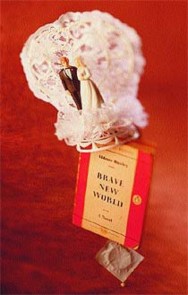
What do a 2000 year old Christian Tradition, the Anglican Lambeth Conference and English author Aldous Huxley have in common?…
In 1930, the Anglican Church made a decision that proved tragic for the entire world. About the only two voices that realized the problem were, of course, the Catholic Church, and surprisingly, an agnostic.
The year is 1932. On the Continent, Adolf Hitler is still 11 months away from gaining control of the German government. Though he continues to search for a way to gain the electoral majority necessary to rule Germany, he has already won a major victory in England, a victory that will continue to grow and metastasize long after he lies dead from a self-inflicted gunshot wound in a burning bunker in Berlin 13 years in the future.
Yet, even as English Churchmen nurture the seed of Hitler’s philosophy on their isle, another voice has risen from among the inhabitants of that gallant land. This voice has spent the last two years forming one of the most insightful and strident attacks on Nazi philosophy ever concocted, and it is now, in February, 1932, that the author releases his work into the stream of history. The battle between the philosophies continues to be fought down to this very day: the battle between the eugenics, advocated in seminal form by the Church of England, and the natural law, upheld by an agnostic who saw the preposterous conclusions to which the contraceptive philosophy must inevitably lead.
The agnostic was Aldous Huxley; his book, Brave New World, would constitute not only an incredibly prophetic description of the contracepting society, but also a deft parody of the Christian church which first legalized the idea. Prior to 1930, contraception had been uniformly condemned by every Christian denomination in the world since the death of Christ.
Unfortunately, Darwin’s work between 1854 and 1872 had a profound influence on European and American society. His “survival of the fittest” argument soon produced the idea that some human beings were less fit, less worthy to procreate than others. Both sides of the Atlantic forged ahead with applications of this “breakthrough” in scientific understanding. Scientific journals devoted to eugenics, the breeding of a better human animal, soon became common throughout Europe. Francis Galton, the man who coined the word “eugenics,” established a research fellowship in University College, London in 1908, and his Eugenics Society began work in the same year.
By the early 1920s, Margaret Sanger and several of her English lovers were touting contraception and involuntary sterilization as a way to limit the breeding of the “human weeds,” as Sanger called them: the insane, the mentally-retarded, criminals, and people with Slavic, Southern Mediterranean, Jewish, black or Catholic backgrounds (ironically, Sanger was herself raised by a Catholic mother). Though most supporters of atheistic rationalist scientific progress don’t advertise it, Hitler’s racial purity schemes were nothing more than the application of 1920s “cutting-edge” biology. When this attitude encountered Christianity, the results were uniformly explosive. Ever since 1867, Anglican bishops had been meeting roughly every ten years at Lambeth Palace, London, in order to discern how best to govern their Church. Mounting eugenics pressures had required the bishops in both the 1908 and the 1920 conferences to fiercely condemn contraception. But the constant eugenics drumbeat would not let up.
The 1930 conference brought even greater internal challenges; many of the people advising the bishops were eugenicists, indeed, at least one attendee, the Reverend Doctor D.S. Bailey, would be both a member of the International Eugenics Society and an active participant in the conference.
Between the general mood of society and the insistence of advisors, the Anglican bishops were placed under extreme pressure to allow some form of artificial contraception. On August 14, 1930, after heated debate, they voted 193 to 67, with 14 abstentions, to permit the use of contraceptives at the discretion of married couples. The decision rocked the Christian world — it was the first time any Christian Church had dared to attack the underlying foundations of the sacred marital act, the act in which another image of God was brought into creation through the parents’ participation in co-creation with God. Pope Pius XI, deeply saddened, issued Casti Connubii, just four short months later on December 31, 1930, reiterating the constant Christian teaching that artificial contraception was forbidden as an intrinsically evil act.
H.G. Wells’ stories of a scientific utopia combined with the publication of the Lambeth decision and Casti Connubii to fire Huxley’s imagination. What would a society which fully endorsed contraception look like? Though Huxley was by no means a Catholic, he possessed a keen intellect and an incisive pen.
His conclusions were soon plain — society as we understood it would fail to survive. Writing in the grand tradition of English parody, he constructed a wickedly accurate portrayal of the contraceptive society, written so as to ensure his English audience would recognize his portrayal of the Church which had set them on the road toward it. In so doing, he inadvertently created an allegory which supports Catholic teaching.
The Catholic teaching on contraception finds its basis in the book of Genesis and in sacramental theology. Adam and Eve were the original bride and bridegroom, the first married couple, their marriage a natural bond formed by God. When Adam and Eve disobeyed God and ate of the fruit of the tree, Adam compounded his sin by publicly repudiating Eve, saying to God, “The woman whom THOU gavest to be with me, she gave me fruit of the tree, and I ate” (Gen. 3:12).
The first couple’s twin sins of disobedience and failure to own up to their actions brought twin curses upon them: increased pain in childbirth and increased toil in order to bring forth sustenance from the earth. Because Adam’s children were not only in the image and likeness of God, but also in Adam’s image and likeness, Scripture describes the first three patriarchs, Abraham, Isaac and Jacob, all suffering from infertility and famine. All three lived out the twin curses of Adam. Both Abraham and Isaac were driven into another land in order to avoid their respective famines and both publicly repudiated their wives while in this foreign land, acting in the image of their forbear (Gen. 12:10-20, 16:1, 15:21, 26:1-6). Both of Jacob’s wives suffered from infertility (Gen. 30:1, 30:9), while the famine which occurred in the life of Jacob, now named Israel, drove all of Israel’s family into Egypt, where they became enslaved.
Thereafter, the twin curses of famine and infertility weave in and out of the whole long history of Israel’s children. The curses would only be broken by the new Bridegroom, Jesus Christ, through the establishment of a new Tree of Life, the Cross (cf. Acts 10:39, Rev. 22:2). The Church was birthed into existence through the pain of the Cross, with Mary, her face twisted in an agony of sorrow, mirroring the face of her crucified Son: “the woman clothed with the sun . . . cried out in her pangs of birth, in anguish for delivery” (Rev .12:2). At the Cross, the pain of childbirth was taken to its limit and destroyed. Similarly, the Eucharistic prayer of the Mass testifies:
“Blessed are You, Lord, God of all creation. Through Your goodness we have this bread to offer, which earth has given and human hands have made. It will become for us the Bread of Life.
Blessed are You, Lord, God of all creation. Through Your goodness we have this wine to offer, fruit of the vine and work of human hands, it will become our spiritual drink.”
The toil of our hands is united to the work of God’s hands, nailed to the Cross, taken to its limit in death, and also destroyed. Thus, the Bridegroom Jesus Christ, leads His Bride the Church to the Cross, the Tree of Life. Christ smashes through the twin curses, and feeds His Bride with the Fruit of the Tree — His own Body. By thus receiving the Bridegroom into Herself, the Bride who is the Church, along with all of Her members, is made fruitful and is given life as a child of God. The sacrament of the Body and Blood of Christ divinizes us (CCC 460, 1988, 1999), allowing us to partake of the Divine Nature (2 Pet. 1:4).
The sacraments of marriage and the Eucharist are inextricably intertwined. The act of marital union is the created image of the reality of the Eucharist, for after the wedding feast, the bride receives the bridegroom into herself and is made fruitful, and both husband and wife are blessed with new life. As a result, the active attempt to destroy the fruitfulness of the marital act is not only a rejection of the grace of marriage, but it is also the implicit rejection of the sacrament that marriage images, the Eucharist.
Though Huxley, the man whom a contemporary called a “neo-pagan” and who eventually began to dabble with Hinduism, did not consciously understand the theology which lies behind the acts of sexuality and contraception, he instinctively understood their interconnection. Because he wanted his Brave New World society to embrace and live out a contraceptive mentality, it replaces the tree with the industrial complex. Huxley understood that universal sterility is unnatural, and no tree, no living thing could produce it. By removing pregnancy, his worldly society removes the curse of the pain of childbirth. His society further ensures this by populating itself with abortion clinics and factories which bring children into existence through in vitro fertilization, in vitro gestation and cloning. Most women are created sterile, but a few are permitted to retain their fertility so their eggs could be harvested in order to produce the next generation. These women are distinguished by their contraceptive cartridge belts, which they are drilled to use from the time of childhood.
The contraceptive society desires not children, but pleasure. Where there is no desire for children, there is likewise no desire for parents — indeed, the very words “mother” and “father” are curse words, the lowest and most vile form of insult, as the phrases “Mary, our Mother” and “Our Father” are in certain circles today. But a sterile world is impossible to live with on a daily basis. The delight in worldly pleasure leaves an ever-thirsting spiritual desert. His society solves this problem with “soma” — the psychedelic wonder-drug which removes the individual from reality. Still, the use of soma is not enough. People need symbols and liturgy, and Huxley knows it. Fortunately, the Anglican Church left his fictional society a rich legacy. They have the sign of the “T,” a reminder of the first mass-produced item in the world, the Model-T Ford, and not-so- coincidentally a broken echo of the Cross, with its vertical connection to heaven cut off:
“And she had shown Bernard the little golden zipper-fastening in the form of a T which the Arch-Community-Songster of Canterbury had given her as a memento of the weekend she had spent at Lambeth . . . ‘A cardinal,’ Mustapha Mond explained parenthetically, ‘was a kind of Arch-Community Songster.’ ” (pp. 118, 157). Since the Arch-Community Songster is a quasi- cardinal, he also leads a quasi-liturgy. Indeed, Huxley spends over half of chapter five describing the liturgical service in detail, the seating arrangements, the music, the distribution of the soma tablets and the “loving cup” filled with soma drink, during which participants experience “the coming of the Ford.” Indeed, the very name Huxley chose to describe this drug which takes the imbiber out of the world, soma, is nothing more than the Greek word for “body.” In other words, the liturgical service is a parody of the Anglican High Mass, recalling the doctrine of the Real Presence: Body, Blood, Soul and Divinity of Jesus Christ, completely present under either species, an offering of love from God to man. It is not an accident that the “loving” cup is quaffed twelve times, recalling the Christian symbolism for the twelve Apostles and the twelve tribes of Israel. And the result of this quaffing is quite intentionally chosen by Huxley — indeed, it characterizes the effect of the entire contracepting society which the Lambeth conference, led by the Archbishop of Canterbury, helped create:
“The President made another sign of the T and sat down. The service had begun. The dedicated soma tablets were placed in the center of the table. The loving cup of strawberry ice-cream soma was passed from hand to hand and, with the formula, “I drink to my annihilation,” twelve times quaffed. Then to the accompaniment of the synthetic orchestra the First Solidarity Hymn was sung . . .” (p. 53). Huxley builds an anti-Eucharist, a eucharist which appears to give everything, but gives nothing at all. Its final effect is not redemption, divinization, the partaking of the Divine Nature; it is annihilation. In other words, Huxley, neo-pagan, quasi-Hindu mystic that he is, recognizes on an intuitive level that contraception necessarily completes the work of the serpent and original sin. In contraception, Huxley finds the work of the anti-Eucharist, the antichrist.
In less than 180 devastating pages, Aldous Huxley not only tears the mask from the face of contraception, he also provides an excellent proof for the necessity of the papal office. The Anglican Conferences which Huxley so neatly parodied demonstrated that any essentially national church must eventually fall prey to the social pressures they operate within. The Anglican Church, having no leader outside of England, was simply unable to protect itself from the concerns of the country and the people to whom they ministered. The fears sown by the eugenicists and the selfishness of the people were simply too compelling for any religious leader to publicly denounce. Any Church which permitted its doctrines to be socially influenced to this degree would eventually allow their cardinals to become “Arch-Community Songsters.” As it turned out, the papal office alone possessed the strength to protect Christianity from the lies bound up within the grinning death’s heads of the contraceptive mentality and its twin sister, the abortion mill.
Though he saw the intrinsic contradictions inherent in the idea of a “contracepting Christian,” Huxley did not directly ask the question which everyone tempted by contraception must answer.
That question had already been posed in 1880, 50 years earlier, by another of the great authors of literature, Fyodor Dostoevsky. In his masterpiece, The Brothers Karamazov, one of the main characters is being tried for the crime of parricide — murdering his own father. The defense attorney appeals to the jury with a simple, compelling question: “The conventional answer to [the question ‘Who is my father?’] is: ‘He begot you, and you are his flesh and blood, and therefore you are bound to love him.’ The youth involuntarily reflects: ‘But did he love me when he begot me?’ he asks, wondering more and more, ‘Was it for my sake he begot me? He did not know me, not even my sex, at that moment, at the moment of passion, perhaps, inflamed by wine’ ” (p. 397).
“Did he love me when he begot me?” When we actively put up chemical or physical walls between ourselves, our lover, and the child which might be begotten, will we truly have loved that child into existence as God loved us into existence, Who gave Himself totally for us? Are we acting in the image of the living God?
This shortlink
https://www.sing-prayer.org/p/6712
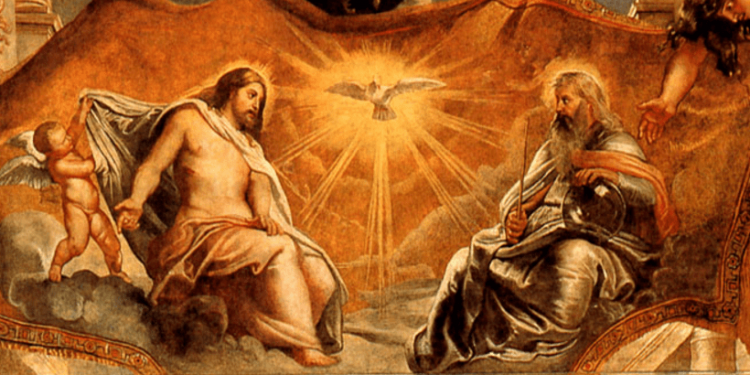
…man…is not creation’s final goal.…Man—simple link in a chain that must go back to God—paves the way for the coming of the blessed Virgin Mary. Mary, God’s jewel case, in which reposed He Who upholds all things, Jesus Christ! – The Roman MissalHe [man] is “the only creature on earth that God has willed for its own sake”. – Catechism of the Catholic Church, 1992. §356
The Roman Missal, 1962, Introduction: “Your Mass and Your Life” (xlvii): In God’s plan, it is not man who is the center of the universe; but Jesus Christ, the Incarnate Word. God created all things for Christ. For the sake of Christ Jesus in Whom the Father already had “placed all His delight” and for the sake of Mary, His Mother, “full of grace,” God decided to create man and the universe.
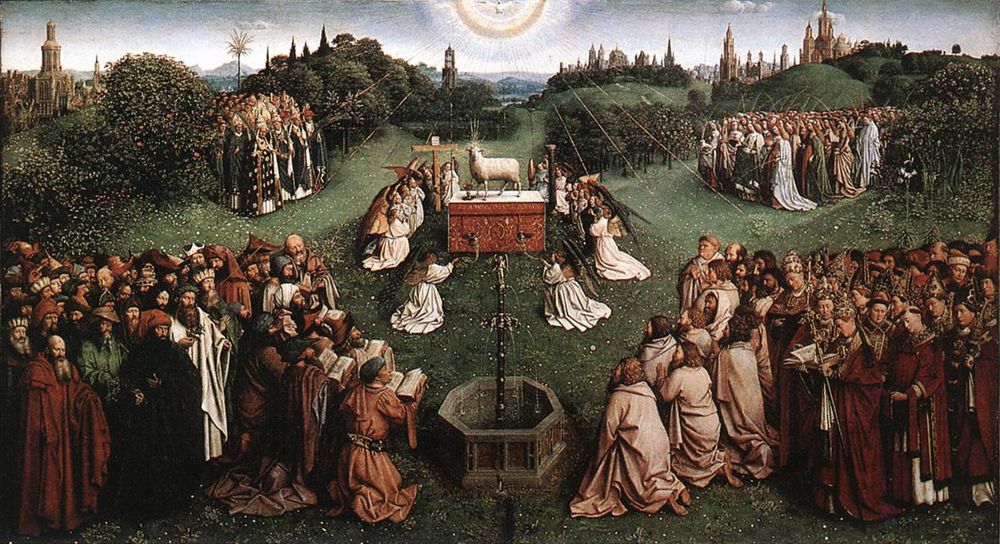
To this Son, in Whom He is well pleased, friends were to be given-and so man was created. (The race of man represents the “friends of the Bridegroom” mentioned by our Lord in the Gospel.) To this Son Whom He loves, the Father will give a house and garden-and so the universe was created. Man, created for Christ, is loved in Him. We thus form, as it were, a “wedding gift” from God the Father to Jesus Christ, the Bridegroom.
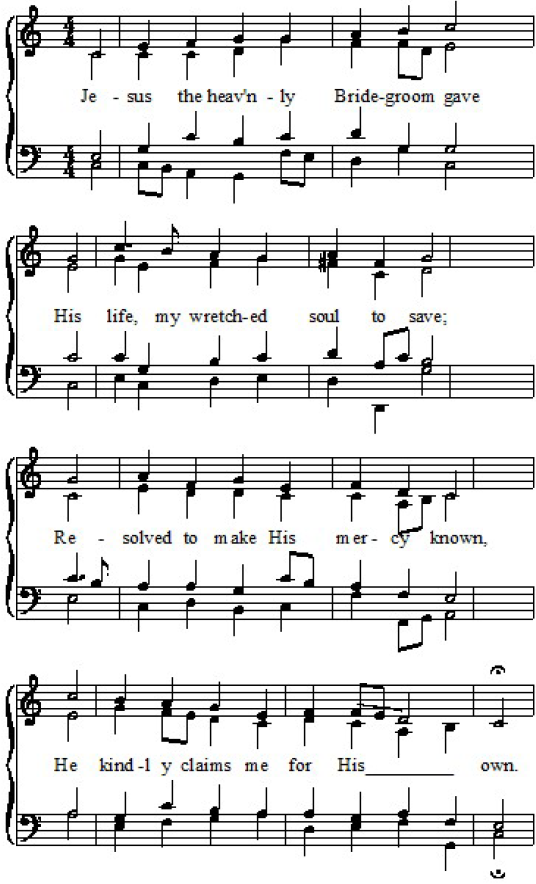
The Hymn, Jesus the Bridegroom (𝄞)
In Him, through Him, and for Him, we are pleasing to the heavenly Father. Without Him we are nothing. This last is very important for an understanding of the Mass. Our sacrifices are of value only through their being united with Christ’s Sacrifice. Since all have issued from the heart of God solely to give pleasure to Jesus, all then are brothers. Creation itself is our kin. The universe and I, what are we, if not a delicate thought of the Father toward His Divine Son?
The creation, launched into existence by God’s loving power, will forever have something unfinished about it, until that time when it shall return to the Source of its perfection; there to receive from that same Source its final perfection and beatitude. Thus the general plan of creation appears to us as an image and prolongation of the fecundity of the Most Blessed Trinity. The chronological order of the plan is as follows:
- Creation of the heavens;
- Preparation of the earth;
- Creation of minerals, vegetation, and animals;
- Creation of man.
King though he may be of that creation predating his own existence, man, however, is not creation’s final goal.
Man—simple link in a chain that must go back to God—paves the way for the coming of the blessed Virgin Mary. Mary, God’s jewel case, in which reposed He Who upholds all things, Jesus Christ! Christ is the center of the universe. He is before all things: “He is before all creatures” (Col. 1:17). “The firstborn of every creature” (Col. 1:15). “In the beginning was the Word … ” (Jn.1:1).
“In Him … through Him … unto Him … all things!” (Col. 1:16, 17).
Jesus, the Bridegroom
In the key of C, as written in the sheet music
Transposed into the key of Bb
| John Fawcett, (1740-1817) |
“Rex Gloriose”, (Andernach Gesangbuch, 1608) |
|---|---|
| 1. Jesus, the heavenly Bridegroom gave His life, my wretched soul to save; Resolved to make His mercy known, He kindly claims me for His_ own. |
5. Angels the wondrous myst’ry view And tune their golden harps anew; They touch the loudest string and raise Their notes to reach the Bride-groom’s_ praise. |
| 2. Rebellious, I against him strove Till melted and constrained by love; With sin and self I freely part, The heav’nly Bridegroom wins my_ heart. |
6. Lost in astonishment, I see Jesus, Thy boundless love to me; With angels I Thy grace adore And long to love and praise Thee_ more. |
| 3. My guilt, my wretchedness He knows, Yet takes and owns me for His spouse; My debts He pays, and sets me free, And turns His riches o’er to_ me. |
7. Since Thou will take me for Thy bride, O keep me, Savior, near Thy side; I fain would give Thy all my heart, Nor ever from my Lord de_-part. |
| 4. My filthy rags are laid aside; He clothes me as becomes His bride; Himself bestows my wedding dress, The robe of perfect right-eous_-ness. |
Amen. |
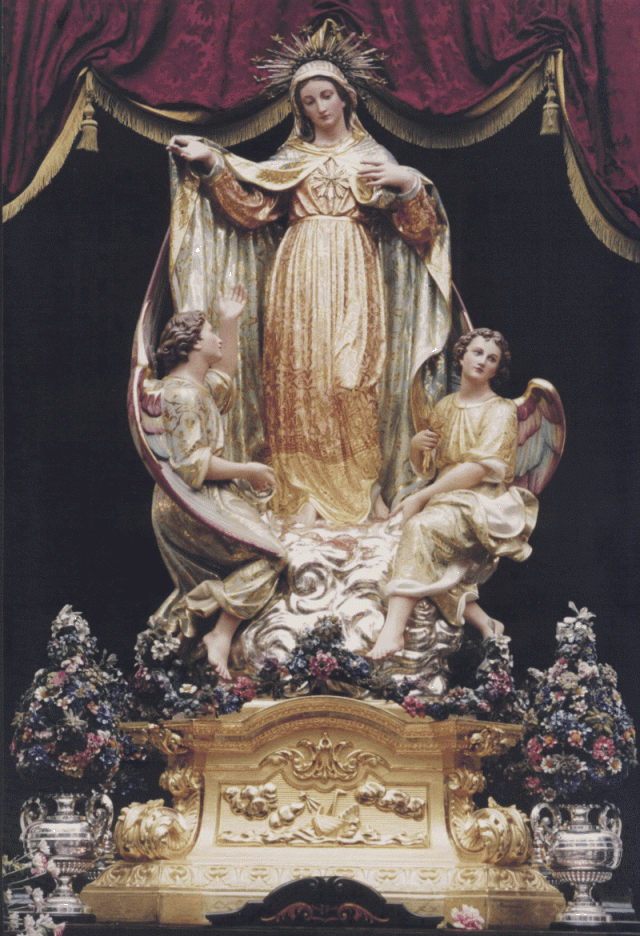
In the key of G
In the key of C
| Fr. Frederick William Faber, (1814-1863) | St. Denio |
|---|---|
| 1. O purest of creatures, sweet Mother! sweet Maid! The one spotless womb wherein Jesus was laid! Dark night hath come down on us, Mother! And we, Look out for thy shining, sweet Star of the Sea! |
2. Deep night has come down on this rough-spoken world, &-the banners of darkness are boldly unfurled; &-the tempest tossed Church— all her eyes are on thee, They look to thy shining, sweet Star of the Sea! |
| 3. He gazed on thy soul; it was spotless and fair; For-the empire of sin—it had never been there; None had ever owned thee, dear Mother! but He, And-He blessed thy clear shining, sweet Star of the Sea! |
4. Earth gave Him one lodging; ‘twas deep in thy breast, And God found a home where the sinner finds rest; His home and His hiding place both were in thee, He-was won by thy shining, sweet Star of the Sea. |
| 5. O blissful and calm was the wonderful rest, That-thou gavest thy God in thy virginal breast; For-the heaven He left, He found heaven in thee, And-He shone in thy shining, sweet Star of the Sea! |
6. To sinners what comfort, to angels what mirth, That God found one creature un- fallen on earth, One spot where His Spirit, un- troubled could be, The depth of thy shining, sweet Star of the Sea! |
| 7. O shine on us brighter than even, then shine, For-the highest of honours, dear Mother! Is thine; “Conceived without sin,” thy chaste title e’re be, Clear light from thy birth-spring, sweet Star of the Sea! |
8. So worship we God in these rude latter days; So worship we Jesus our Love, when we praise, His wonderful grace in the gifts He gave thee, The gift of clear shining, sweet Star of the Sea! |
| 9. Deep night hath come down on us, Mother! Deep night, And-we need more than ever the guide of thy light; For-the darker the night is the brighter should be, Thy beautiful shining, sweet Star of the Sea! |
Amen. |
Categories
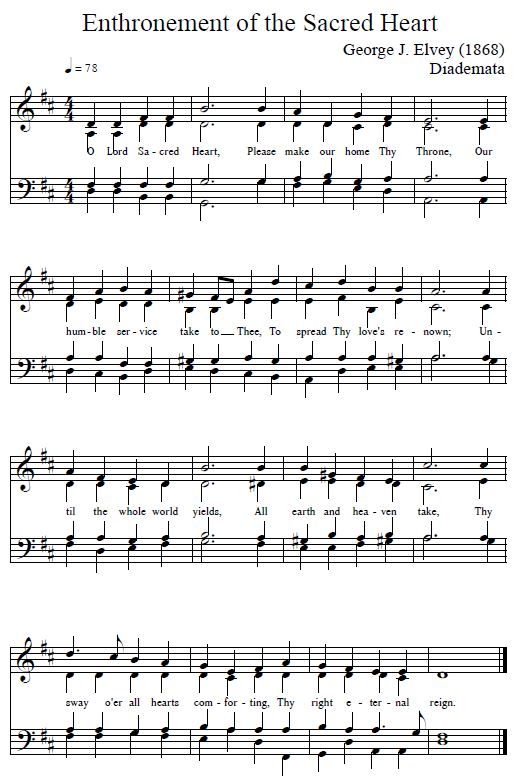
Hymn Enthronement of the Sacred Heart
Opening of the Enthronement Ceremony
Click the ▶ Button to sing the prayer, or play the song in a New Window ⧉
O Lord Sacred Heart
Please make our home Thy throne
Our humble service take to_ Thee
To spread Thy love’s renown
Until the whole world yields
All earth and heaven take
Thy sway o’er all hearts comforting
Thy right eternal reign.
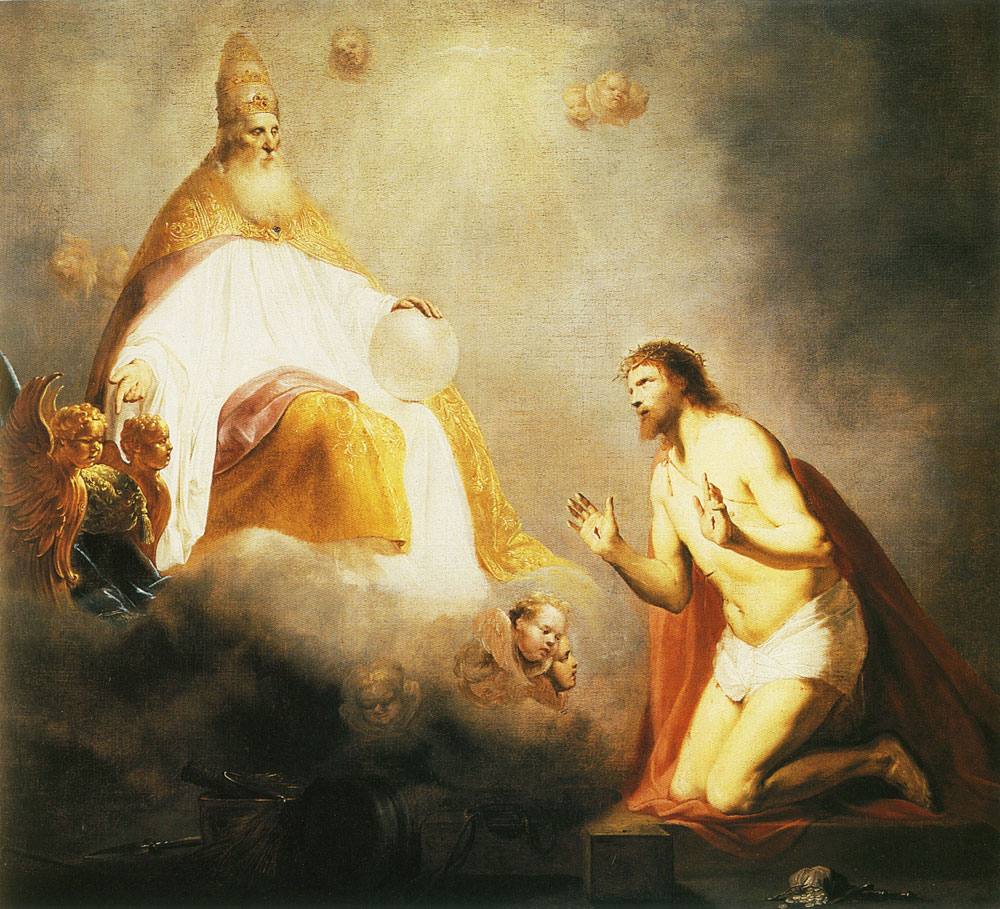
Conclusion of the Enthronement (Postlude)
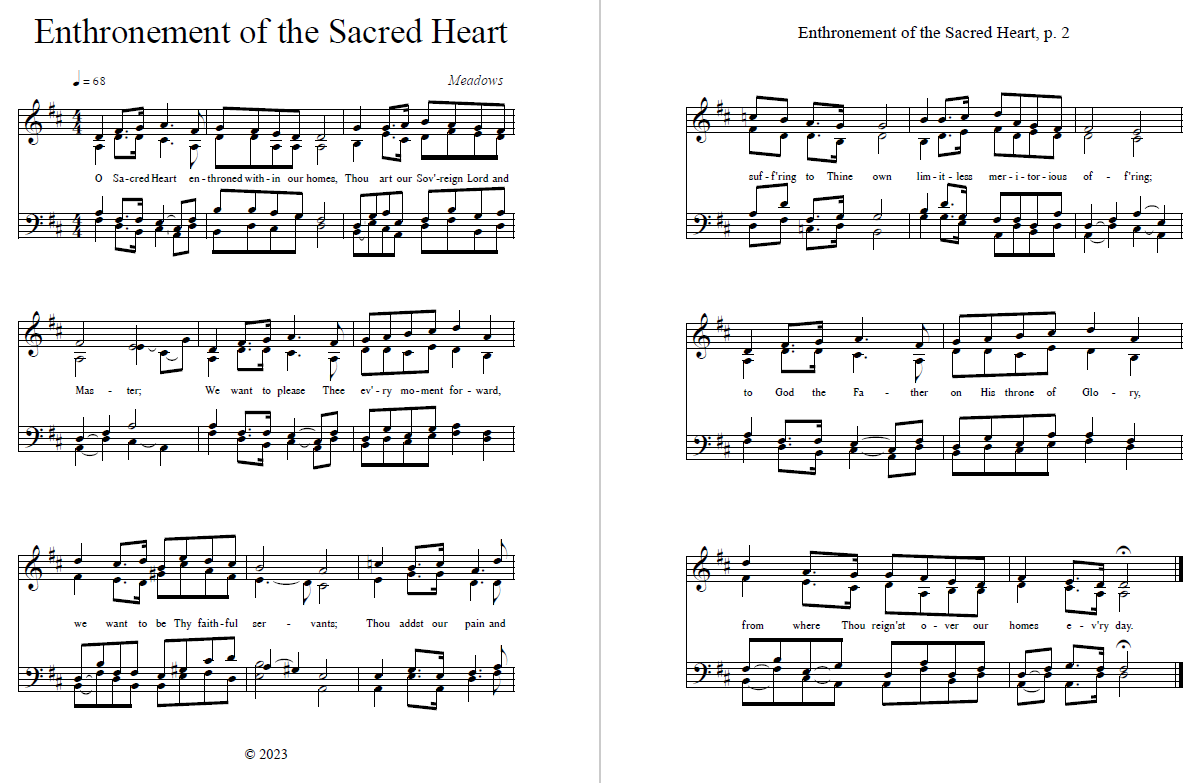
Click the ▶ Button to sing the prayer, or play the song in a New Window ⧉
O, Sacred Heart, enthroned within our homes,
Thou art our Sovereign Lord and Master;
We want to please Thee every moment forward,
We want to be Thy faithful servants;
Thou add’st our pain and suf’fring to Thine own,
Limitless meritorious off’ring,
To God the Father, on His throne of Glory,
From where Thou reign’st over our homes every day.
 (See The Apostolate of Suffering)
This shortlink
https://www.sing-prayer.org/p/5221
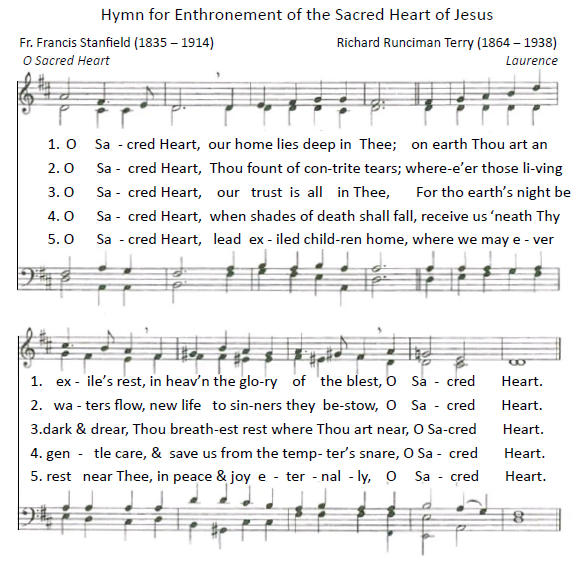
Fr. Francis Stanfield (1835 – 1914)
O Sacred Heart
Richard Runciman Terry (1864 – 1938)
Laurence
- O Sacred Heart, our home lies deep in Thee; on earth Thou art an exile’s rest, in heav’n the glory of the blest, O Sacred Heart.
- O Sacred Heart, Thou fount of contrite tears; where’er those living waters flow, new life to sinners they bestow, O Sacred Heart.
- Sacred Heart, our trust is all in Thee, For though earth’s night be dark and drear, Thou breathest rest where Thou art near, O Sacred Heart.
- Sacred Heart, when shades of death shall fall, receive us ‘neath Thy gentle care, and save us from the tempter’s snare, O Sacred Heart.
- Sacred Heart, lead exiled children home, where we may ever
rest near Thee, in peace and joy eternally, O Sacred Heart.
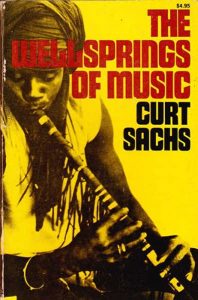 A pioneering student of culture, ethnomusicologist Curt Sachs (1881-1959), made a coherent argument, in terms of the normal coexistence, and, indeed, mutual inter-penetration of cultural influences, among the seeming, disparate forms of fine-art music, authentic folk music, progressive popular music, urban music, and other forms.
Cultural suppression of folk music in the English Civil War and the interregnum of Oliver Cromwell, was injurious to the development of a native English art music.
An example of the interrelation of art- and folk music, may be considered in the English Suite No. 6 in D Minor, BWV 811: VI. Gavotte II, with a bagpipe like compositional style. (The influence of Bach on Brazilian progressive popular music is an example in the reverse, the downward direction.)
Sachs made an assertion that is contested to this day; yet the facts that prompted his claim are indisputable: between the death of Henry Purcell in 1695 and the rise of Sir Edward Elgar in 1898, there was a greater than 200 year gap in the presence of home-born English fine art composers. (Thomas Arne, “Hail Britania”, and Charles Avison, orchestral arrangements of Domenico Scarlatti’s harpsichord music, notwithstanding.)
Sen. Daniel Patrick Monyihan was famous for his observation, “everyone has a right to their own opinions, but not their own facts”.
Since Curt Sachs made the observation, his opinion is significant, and needs to be disproved, by those who don’t accept it:
Sachs maintained that Roundhead cultural repression of folk music–witnessed by a play Bartholomew Fair by a man who paid with his life for resisting that repression, Ben Jonson (1572-1637)–was directly instrumental in disruption of the normal feeding-upwards of art music from the cultural loam of folk music.
This shortlink
https://www.sing-prayer.org/p/3805
Ave Maria
J.S. Bach / Charles Gounod
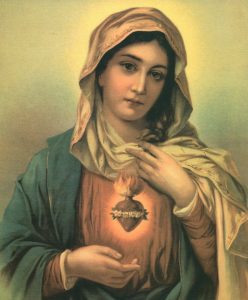
It is my fondest wish for Katie Jean that when she closes her eyes, she opens them on the face of this Woman.
This shortlink
http://www.sing-prayer.org/p/2870

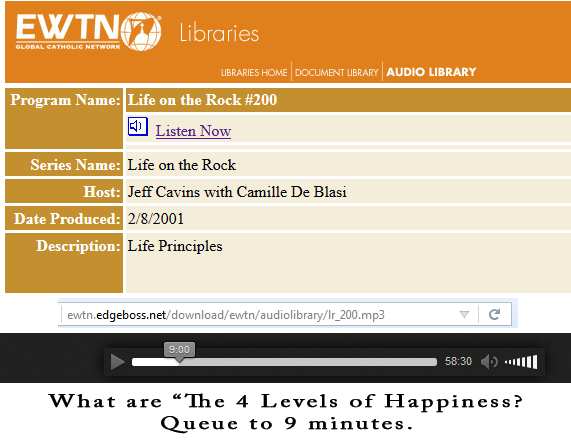
Audio Extract on the meaning of suffering in terms of Father Robert Spitzer’s “Four Levels of Happiness”
Comment on the Extract, Above (Click/Expand or Bypass)
Click ^ again to contract
The podcast above contains an extract from a talk about the pro-life implications of Fr. Robert Spitzer’s teaching on
the Four Levels of Happiness . The Fourth Level, extracted here, is involved with the broader topic of the Apostolate of Suffering in relation to the Holy Souls in Purgatory. There seems to be some relation to an outline from St. Thomas, on the balance between vices and virtues, as follows: “The vices of those who fall can be categorized as involving pleasure, possessions, prestige and power.”
It may be that the virtue which is the opposite of vice of seeking after power, the fourth of those falls, is involved with the the accumulation of merit through suffering, especially with our petitioning our Blessed Lord to accept our sufferings for inclusion with His infinitely meritorious sufferings. (cf. “I Paul … now rejoice in my sufferings for you, and fill up those things that are wanting of the sufferings of Christ, in my flesh, for his body, which is the church…” Colossians 1:23-24) For our sufferings to be made use of by our Blessed Lord, requires as a first step, our giving up the pursuit of power.
Our Blessed Lord had told St. Peter, in John 21:18, that “Amen, amen I say to thee, when thou wast younger, thou didst gird thyself, and didst walk where thou wouldst. But when thou shalt be old, thou shalt stretch forth thy hands, and another shall gird thee, and lead thee whither thou wouldst not.” That historical event, the Lord’s speaking so to St. Peter, has been interpreted as regarding how St. Peter would die crucified upside-down; it relates directly to the topic of the audio extract above.
Click the ▶ Button to hear the complete program from which the extract was taken,, or open in a New Window ⧉
Jeff Cavins interviews Camille de Blasi Pauley on “The Four Levels of Happiness” on the EWTN Radio Program “Life on the Rock”
Philomena (2 years old) sings in a deep voice, and when she walks, she swings her elbows like a sailor walking on a swaying ship deck. (What a character.) This key, which her makes her grandpa sound like a pirate singing, is 5 half-steps high or 7 half-steps low, from the traditional key. Only the Men’s part is offered here.
Click the ▶ Button to sing the carol (key for Men), or play the carol in a New Window ⧉
| Deck the halls with boughs of holly, | ‘Tis the season to be jolly, |
|
Fa la la la la la la la! |
|
| Don we now our gay apparel, | Troll the ancient Yuletide carol, |
|
|
|
| See the blazing yule before us, | Strike the harp and join the chorus, |
|
Fa la la la la la la la! |
|
| Follow me in merry measure, | While I tell of Yuletide treasure, |
|
|
|
| Fast away the old year passes, | Hail the new, ye lads and lasses, |
|
Fa la la la la la la la! |
|
| Sing we joyous all together! | Heedless of the wind and weather, |
|
|
|
| Deck the halls with boughs of holly, | ‘Tis the season to be jolly, |
|
Fa la la la la la la la! |
|
| Don we now our gay apparel, | Troll the ancient Yuletide carol, |