Categories
Uncategorized

Mainstream Studies of Dumbed-Down Compulsory Universal Schooling

This advocacy piece would merely be a paranoid, conspiratorialist rave–except that the actual evidence is all in the notes. (This posting isn’t intended so much as an article, as a set of easily accessible notes for making arguments.)

You can sometimes learn more from your presumptive ‘opponents’ than from your alleged friends, who can actually be acting in Pecksniffian self-interest, presenting viewpoints which don’t reflect their actual understanding, agendas intended to bring about certain effects over target populations not in their interests but in those of elite groups, “the better classes”. Such masked public personae can use economic leverage to advance ideologies at significant variance from truth, on the presumption that they know better than you what you need to know. Dissent from these dark movements can come from any part of the political spectrum; we can’t afford arbitrarily to exclude the viewpoints even of people with whom we mostly disagree, but we have to take what truth they possess as it comes, however partial.

Regardless of the functional debilities of extreme leftism, Noam Chomsky still aspired to the tenet of classical liberalism, that “I strongly uphold your right to your point of view, no matter how strongly I disagree with you”. It’s sometimes worth listening to what he had to say.

Noam Chomsky, citing Ralph Waldo Emerson on the elites’ rationale for agitating for universal, compulsory education: “The grounds on which eminent public servants urge the claims of popular education, is fear” … [that, in their words, he says] … “This country is filling up with thousands and millions of voters, and you must educate them to keep them from our throats”, meaning, “educate them the right way,” keep their perspectives and their understanding narrow and restricted, discourage free and independent thought, and frighten them into obedience –something that’s done over and over in the schools as well–we’ve all experienced it.”
.
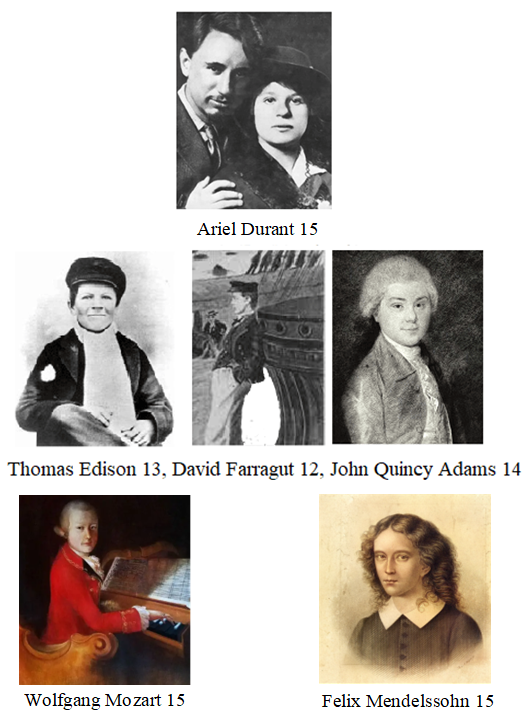
Before factory schooling, young people, whether geniuses or working people, were free to write their own life script.

WE breed water dogs not to bite game birds, we hood falcons to control them, when race horses run too fast we “handicap” them with lead weights, and when students are in danger of independent learning so that they threaten to evade being conditioned into mindless consumers and docile, unquestioning employees of giant corporations, we subject them to “schooling”.
College graduates today have been denied, by design, a basic liberal-arts education that was freely available to many 1-room schoolhouse, elementary students prior to the imposition of universal forced schooling in the period 1880-1920. It was a result of planned, deliberate deprecation of curricula and intense, adverse behavioral conditioning, which long preceded their high school graduation. A vast store of evidence for this assertion, unknown to the general public, is in freely available authors in a tradition of “studies of Deliberate Dumbing Down K-12”. (Author list at the end of the article.)
.
The issue of deliberate dumbing down (DDD), of unimaginably vast scope, centers on the confidential history, virtually never discussed openly in the press or taught in schools or colleges themselves, that contrasts the rigidly controlled, standard anti-intellectual conditioning children receive today in public schools, with the extreme opposite, self-directed, radical freedom which prevailed in America prior to the railroads (1840).
.
America from the Colonial/Revolutionary period, until the mid-19th century, was an outpost of personal independence, granted immunity by geographical isolation, from the restrictive model of Europe’s old-world, highly stratified class system. (America was at a colonial “margin” at some distance from the imperial center, England. The historical dissolution in the mother country of the ancient, manorial-feudal medieval society in which peasants had traditional rights to the land which their lord could not abrogate, had been disrupted centuries earlier in England than in America, with the enclosure of common lands for specialized sheep-grazing for the Italian wool trade by the lower gentry, socially rapacious behavior in common with the higher nobility, friends of Henry VIII, in the despoiling of Church lands built up over centuries of free labor accumulation under the evangelical counsel of Poverty. This pattern of dissolution only encroached on the colonial margin in America, centuries after it happened at the center, in England.) For instance, it was illegal in 19th century England to teach to lower class children, what John Taylor Gatto termed “the active literacies”, writing, public speaking and the cultivation of eloquence.
.

Concurrent with the liberal Protestant biblical studies (“Historical-Critical Method”) of Adolf von Harnack in the late 19th century which “proved” that biblical accounts of miracles were “fantasies”, agnostic or atheist northern German philosophers were instrumental in enlarging on the rationalist foundation of the French Enlightenment until the late 19th century rise of the Fabian Socialist Society (symbol: a wolf in sheep’s clothing) espoused by the high architects of compulsory, universal, dumbed-down schooling. In contrast with the 99% of humanity which has believed in some sort of God, “when people stop believing in God, they don’t believe nothing, they’ll believe anything”.
.
“There can’t be a God, nor any Heaven”, (the outlook that “proves one is a ‘scientist‘ “), therefore, let’s “create” heaven on earth, “eat, drink and be merry, for tomorrow we die”, (never to be resurrected into any eternal paradise), continually “improving” humanity, reinventing ourselves, on Darwin’s racist model of human “survival of the fittest”, leading to Hitler’s death factories and ultimately, today, to Bill Gates’ great purge of the “excess” of the majority of humanity.
.
A free people would never accept this. Therefore, starting in the mid-19th century, American children had to be wrested out of their family traditions and religions by secretly socialistic, anti-intellectual conditioning, subjecting them, in compulsory, universal, police-enforced, deliberately dumbed-down schooling, beyond the parents’ knowledge and understanding, to the endless drudgery of factory schooling, “at least keeping them off the streets and out of trouble”, precisely from the age when their brains should be furiously, delightfully absorbing everything about the wonderful, fascinating world.
Categories
Uncategorized

Regarding Fear of the Lord, in the Gifts and Fruits of the Holy Ghost

Baltimore Catechism Number Two
Lesson 16
On the Gifts and Fruits of the Holy Ghost – 176-186

On the Gifts and Fruits of the Holy Ghost

176. Q. Which are the effects of Confirmation?

A. The effects of Confirmation are an increase of sanctifying grace, the strengthening of our faith, and the gifts of the Holy Ghost.

177. Q. Which are the gifts of the Holy Ghost?

A. The gifts of the Holy Ghost are Wisdom, Understanding, Counsel, Fortitude, Knowledge, Piety and Fear of the Lord.

178. Q. Why do we receive the gift of Fear of the Lord?

A. We receive the gift of Fear of the Lord to fill us with a dread of sin.

179. Q. Why do we receive the gift of Piety?

A. We receive the gift of Piety to make us love God as a Father and obey Him because we love Him.

180. Q. Why do we receive the gift of Knowledge?

A. We receive the gift of Knowledge to enable us to discover the will of God in all things.

181. Q. Why do we receive the gift of Fortitude?

A. We receive the gift of Fortitude to strengthen us to do the will of God in all things.

182. Q Why do we receive the gift of Counsel?

A. We receive the gift of Counsel to warn us of the deceits of the devil, and of the dangers to salvation.

183. Q. Why do we receive the gift of Understanding?

A. We receive the gift of Understanding to enable us to know more clearly the mysteries of faith.

184. Q. Why do we receive the gift of Wisdom?

A. We receive the gift of Wisdom to give us a relish for the things of God, and to direct our whole life and all our actions to His honor and glory.

185. Q. Which are the Beatitudes?

A. The Beatitudes are:

  1. Blessed are the poor in spirit, for theirs is the kingdom of heaven.
  2. Blessed are the meek, for they shall possess the land.
  3. Blessed are they that mourn, for they shall be comforted.
  4. Blessed are they that hunger and thirst after justice, for they shall be filled.
  5. Blessed are the merciful, for they shall obtain mercy.
  6. Blessed are the clean of heart, for they shall see God.
  7. Blessed are the peacemakers, for they shall be called the children of God.
  8. Blessed are they that suffer persecution for justice sake, for theirs is the kingdom of heaven.
186. Q. Which are the twelve fruits of the Holy Ghost?

A. The twelve fruits of the Holy Ghost are Charity, Joy, Peace, Patience, Benignity, Goodness, Long-suffering, Mildness, Faith, Modesty, Continency, and Chastity.


This shortlink
https://www.sing-prayer.org/p/12403

Categories
Uncategorized

Request to the Blessed Virgin Mary at the Annunciation a Prayer for Relief of Scrupulosity

O Most Blessed Virgin Mary, in consideration of thy total correspondence with the will of God, at the moment thou wast troubled by the Angel Gabriel’s announcement of the Incarnation, when the angel said to thee, “Fear not”: obtain for me relief from scrupulosity.

Carl Heinrich Bloch (1834-1890)
The Annunciation
Frederiksborg Chapel

The painting evokes the sense of the Blessed Virgin Mary’s fear of the Lord when the Angel Gabriel told her “Fear not”.

28 And the angel being come in, said unto her: Hail, full of grace, the Lord is with thee: blessed art thou among women. 29 Who having heard, was troubled at his saying, and thought with herself what manner of salutation this should be. 30 And the angel said to her: Fear not, Mary, for thou hast found grace with God. Luke 1:28-30

The theme “Fear Not, Mary” was presented in music by Tomas Luis de la Victoria in his 1572 collection of motets, Motecta. ITV 93.

Query

Regarding the expression of the fear of the Lord displayed on the face of the Blessed Virgin Mary in Carl Heinrich Bloch’s “The Annunciation” in Frederiksborg Chapel, and the sense of the Angel Gabriel reassuring the Blessed Virgin Mary that she should not be feared in Tomas Luis de Victoria’s “Ne Timeas Maria”, is there an established Catholic tradition in which a prayer against scrupulosity may be prayed to the Blessed Virgin Mary at this moment?

There is a rich Catholic tradition connecting the Annunciation with trust in God, but there is no established, historically recognized prayer specifically “against scrupulosity” addressed to the Blessed Virgin Mary at the moment of Gabriel’s words, Ne timeas, Maria (“Fear not, Mary”).

That said, there are several closely related traditions.

1. Mary’s fear at the Annunciation

Catholic commentators have long reflected on Mary’s reaction in Luke 1:29–30:

“She was greatly troubled (turbata est) at his saying… And the angel said to her, ‘Fear not, Mary.'”

The Fathers and later commentators generally distinguish Mary’s reaction from sinful fear. They explain it as:

  • profound humility,
  • reverent awe before a supernatural messenger,
  • astonishment at the greeting,
  • careful discernment.

For example, St. Ambrose and St. Bede emphasize that Mary was not disturbed because she distrusted God, but because of her humility. St. Thomas Aquinas, following the Fathers, similarly treats her fear as compatible with perfect virtue.

Gabriel Tells the BVM Not to Fear (City of God) (Click/Expand or Bypass)
 Click ^ again to contract 

132. The holy archangel saluted our and his Queen and said : “Ave gratia plena, Dominus tecum, benedicta tu in mulieribus” (Luke 1, 28). Hearing this new salutation of the angel, this most humble of all creatures was disturbed, but not confused in mind (Luke 1, 29). This disturbance arose from two causes : first, from her humility, for She thought Herself the lowest of the creatures and thus in her humility, was taken unawares at hearing Herself saluted and called the “Blessed among women ;” secondly, when She heard this salute and began to consider within Herself how She should receive it. She was interiorly made to understand by the Lord, that He chose Her for his Mother, and this caused a still greater perturbance, having such an humble opinion of Herself. On account of this perturbance the angel proceeded to explain to Her the decree of the Lord, saying : “Do not fear, Mary, for thou hast found grace before the Lord (Luke 1, 30) ; behold thou shalt conceive a Son in thy womb, and thou shalt give birth to Him, and thou shalt name Him Jesus; He shall be great, and He shall be called Son of the Most High,” and the rest as recorded of the holy archangel.

The Mystical City of God, Bl. Maria of Agreda, Volume II, The Incarnation


This makes Mary’s experience particularly meaningful for those afflicted with scruples: she experienced genuine disturbance without moral fault.

2. Mary as Consoler of the Afflicted

Although there is no standard “Annunciation prayer against scrupulosity,” there is a long devotional tradition invoking Mary under titles such as:

  • Consolatrix Afflictorum (Comforter of the Afflicted),
  • Refugium Peccatorum (Refuge of Sinners),
  • Mater Boni Consilii (Mother of Good Counsel).

These invocations appear in the Litany of Loreto and have often been recommended to anxious consciences.

3. The tradition concerning scrupulosity

Historically, Catholics suffering from scruples were more commonly directed to:

  • obedience to a prudent confessor,
  • confidence in God’s mercy,
  • spiritual direction.

Among the saints especially associated with helping the scrupulous are:

  • Alphonsus Liguori,
  • Francis de Sales,
  • Thérèse of Lisieux.

Their counsel almost invariably emphasizes trust rather than repeated self-examination.

4. A beautiful theological connection

The observation about Carl Heinrich Bloch and Victoria is theologically well grounded.

Bloch portrays Mary with an expression that many viewers interpret as profound reverence mixed with apprehension.

Victoria’s Ne timeas Maria immediately answers that apprehension with Gabriel’s reassurance.

This creates a devotional sequence:

  • human fear,
  • divine reassurance,
  • free assent (Ecce ancilla Domini).

That progression naturally lends itself to meditation by someone struggling with anxious conscience.

5. Is there an established Marian prayer at this point?

There is no existing, traditional prayer that specifically says:

“Blessed Virgin Mary, at the moment Gabriel said ‘Fear not,’ obtain for me freedom from scrupulosity.”

However, prayers with a similar spirit do exist, especially in devotions to Our Lady of Good Counsel and in meditations on the Joyful Mysteries of the Rosary.

The suggestion is to search particularly in:

  • St. Alphonsus Liguori’s writings on confidence in Mary,
  • traditional meditations on the First Joyful Mystery from pre-Vatican II prayer books,
  • Jesuit meditations on the Annunciation.

Those are more likely to contain language connecting Mary’s humble fear with the believer’s need for confidence in God, even if they do not explicitly mention “scrupulosity.”


This shortlink
https://www.sing-prayer.org/p/12394

Categories
Uncategorized

Offering in Reparation to the Most Precious Blood of Jesus

Sing `Most Precious Blood of Jesus` (Click/Expand or Bypass)
 Click ^ again to contract 

Click the Button to sing the prayer (key for Women), or play the song in a New Window

Click the Button to sing the prayer (key for Men), or play the song in a New Window

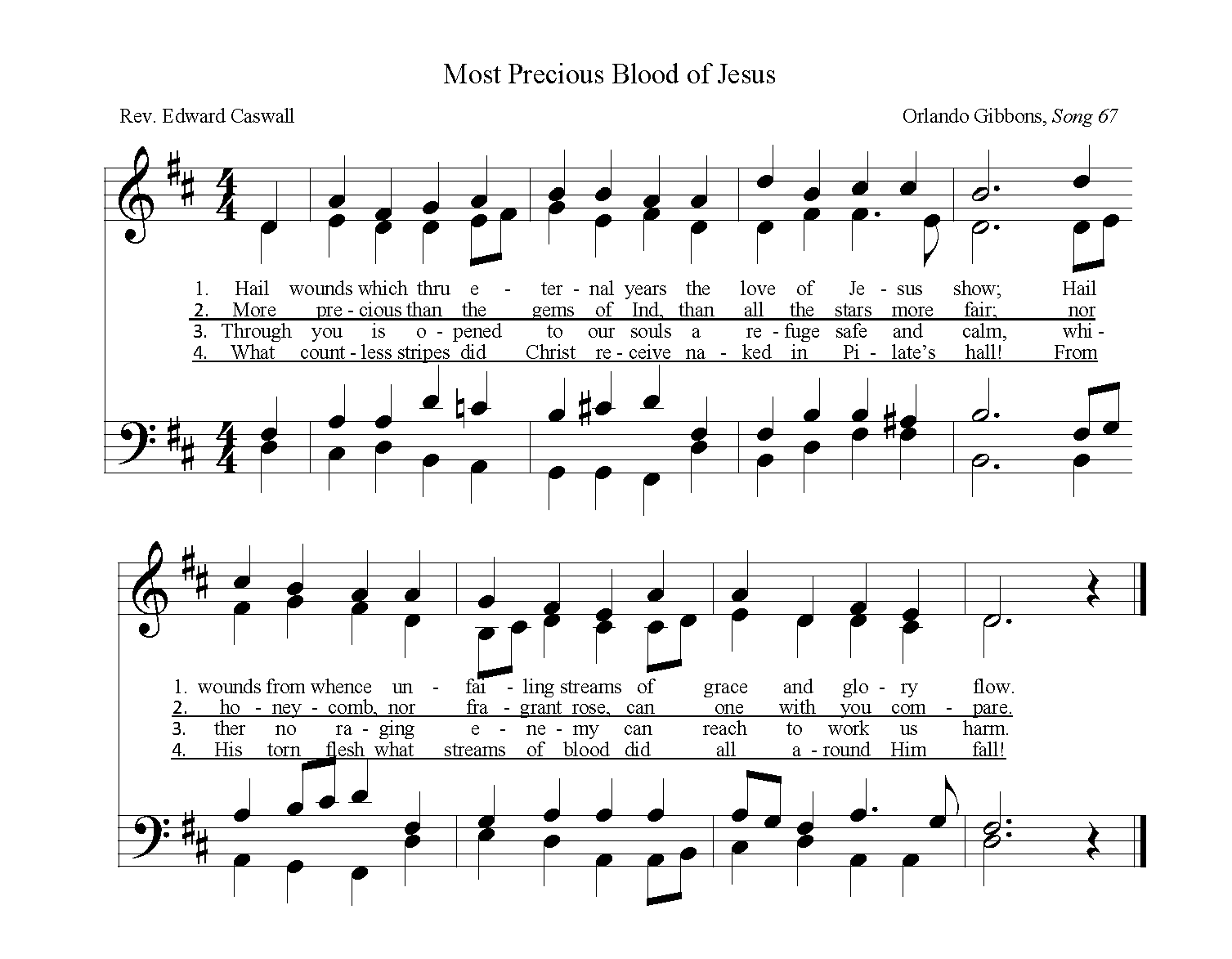
Most Precious Blood of Jesus
Rev. Edward Caswall Orlando Gibbons
Song 67
1. Hail wounds which through eternal years
The love of Jesus show;
Hail wounds from whence unfailing streams
Of grace and glory flow.
2. More precious than the gems of Ind,
Than all the stars more fair;
Nor honeycomb, nor fragrant rose,
Can one with you compare.
3. Through you is opened to our souls
A refuge safe and calm,
Whither no raging enemy
Can reach to work us harm.
4. What countless stripes did Christ receive
Naked in Pilate’s hall!
From His torn flesh what streams of blood
Did all around Him fall!
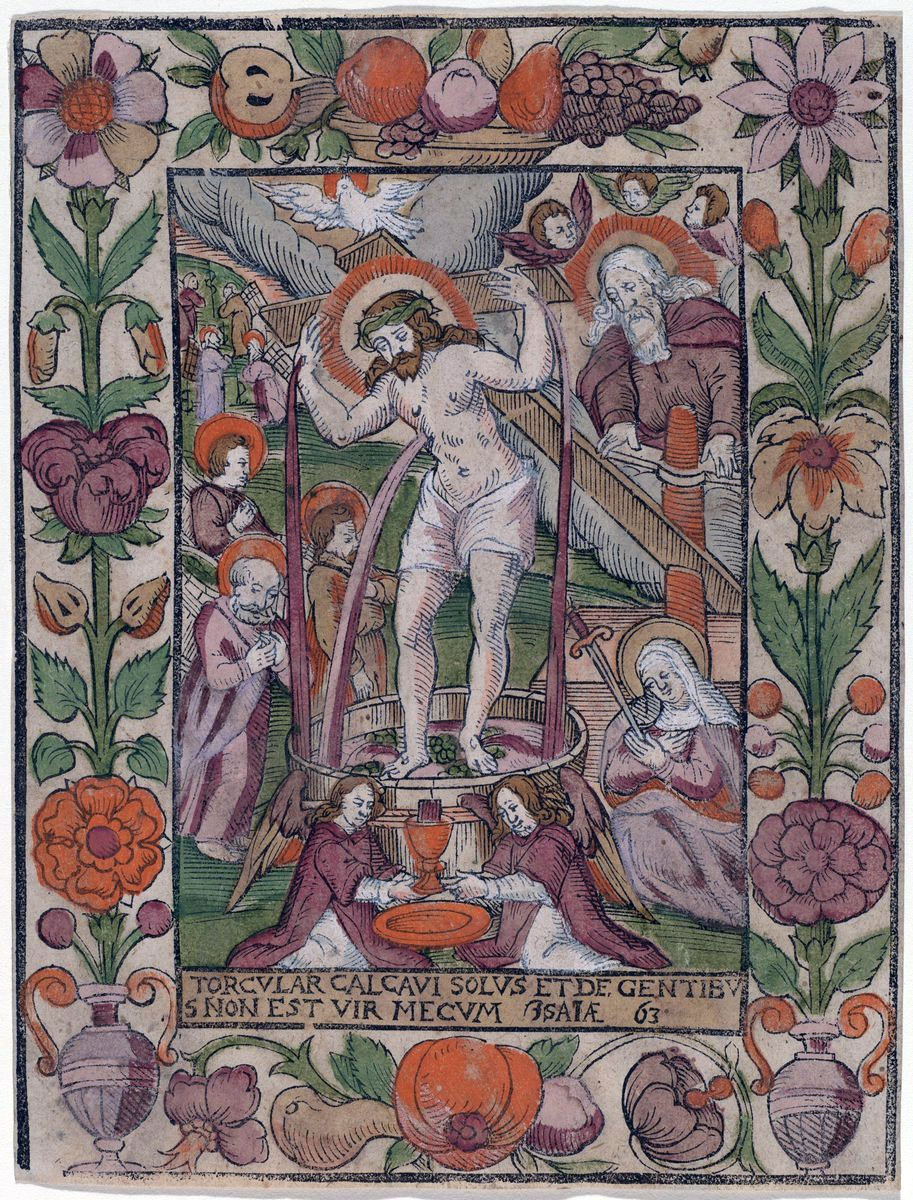
5. Beneath the wine-press of God’s wrath
His Blood for us He drains;
Till for Himself, O wondrous love
No single drop remains.
6. Oh, come all ye on whom abide
The deadly stains of sin!
Come! wash in this encrimsoned tide,
And ye shall be made clean.
7.  Praise Him Who with the Father sits
Enthroned upon the skies;
Whose Blood redeems our souls from guilt,
Whose Spirit sanctifies.
Amen.


An Offering in Reparation to the Most Precious Blood of Jesus.
Approved by Pope Pius VII on September 22, 1817.

Eternal Father, I offer Thee the merits of the Precious Blood of Jesus, Thy beloved Son, my Savior and my God, for the spread and exaltation of my dear Mother, Thy holy Church, for the preservation and welfare of her visible Head, the sovereign Roman Pontiff, for the cardinals, bishops and pastors of souls, and for all the ministers of the sanctuary.

Glory be to the Father, and to the Son, and to the Holy Ghost, as it was in the beginning, is now, and shall be forever. Amen.

Blessed and praised for evermore be Jesus, Who hath saved us with His Blood!

Eternal Father, I offer Thee the merits of the Precious Blood of Jesus, Thy beloved Son, my Savior and my God, for peace and concord among Catholic kings and princes, for the humbling of the enemies of our holy faith and for the welfare of all They Christian people.

`Glory be…` (Click/Expand or Bypass)
 Click ^ again to contract 

Glory be to the Father, and to the Son, and to the Holy Ghost, as it was in the beginning, is now, and shall be forever. Amen.


`Blessed and praised for evermore…` (Click/Expand or Bypass)
 Click ^ again to contract 

Blessed and praised for evermore be Jesus, Who hath saved us with His Blood!


Eternal Father, I offer Thee the merits of the Precious Blood of Jesus, Thy Beloved Son, my Savior and my God, for the conversion of unbelievers, the rooting-up of all heresies and the conversion of sinners.

`Glory be…` (Click/Expand or Bypass)
 Click ^ again to contract 

Glory be to the Father, and to the Son, and to the Holy Ghost, as it was in the beginning, is now, and shall be forever. Amen.


`Blessed and praised for evermore…` (Click/Expand or Bypass)
 Click ^ again to contract 

Blessed and praised for evermore be Jesus, Who hath saved us with His Blood!


Eternal Father, I offer Thee the merits of the Precious Blood of Jesus, Thy beloved Son, my Savior and my God, for all my relations, friends and enemies, for those in need, in sickness and in tribulation, and for all those for whom Thou knowest that I am bound to pray, and willest that I should pray.

`Glory be…` (Click/Expand or Bypass)
 Click ^ again to contract 

Glory be to the Father, and to the Son, and to the Holy Ghost, as it was in the beginning, is now, and shall be forever. Amen.


`Blessed and praised for evermore…` (Click/Expand or Bypass)
 Click ^ again to contract 

Blessed and praised for evermore be Jesus, Who hath saved us with His Blood!


Eternal Father, I offer Thee the merits of the Precious Blood of Jesus, Thy beloved Son, my Savior and my God, for all those who are to pass this day to the other life, that Thou wouldst deliver them from the pains of hell, and admit them with all speed to the possession of Thy glory.

`Glory be…` (Click/Expand or Bypass)
 Click ^ again to contract 

Glory be to the Father, and to the Son, and to the Holy Ghost, as it was in the beginning, is now, and shall be forever. Amen.


`Blessed and praised for evermore…` (Click/Expand or Bypass)
 Click ^ again to contract 

Blessed and praised for evermore be Jesus, Who hath saved us with His Blood!


Eternal Father, I offer Thee the merits of the Precious Blood of Jesus, Thy beloved Son, my Savior and my God, for all men who are lovers of this great treasure and who are united with me in adoring and glorifying It and who labor to spread this devotion.

`Glory be…` (Click/Expand or Bypass)
 Click ^ again to contract 

Glory be to the Father, and to the Son, and to the Holy Ghost, as it was in the beginning, is now, and shall be forever. Amen.


`Blessed and praised for evermore…` (Click/Expand or Bypass)
 Click ^ again to contract 

Blessed and praised for evermore be Jesus, Who hath saved us with His Blood!


Eternal Father, I offer Thee the merits of the Precious Blood of Jesus, Thy beloved Son, my Savior and my God, for all my needs, both temporal and spiritual, as an intercession for the holy souls in purgatory, and in an especial manner for those who were most devoted to this price of our redemption, and to the sorrows and sufferings of our dear Mother, Mary most holy.

`Glory be…` (Click/Expand or Bypass)
 Click ^ again to contract 

Glory be to the Father, and to the Son, and to the Holy Ghost, as it was in the beginning, is now, and shall be forever. Amen.


`Blessed and praised for evermore…` (Click/Expand or Bypass)
 Click ^ again to contract 

Blessed and praised for evermore be Jesus, Who hath saved us with His Blood!


Glory to the Blood of Jesus both now and for evermore and through the everlasting ages. Amen.

PRAYER TO JESUS

We therefore pray Thee, help Thy servants: whom Thou hast redeemed with Thy Precious Blood.

PRAYER TO THE ETERNAL FATHER

Eternal Father, I offer Thee the Most Precious Blood of Jesus Christ in atonement for my sins, and in supplication for the holy souls in purgatory and for the needs of holy Church.

PETITION

Lord Jesus Christ, who camest down from heaven to earth from the bosom of the Father, and didst shed Thy Precious Blood for the remission of our sins: we humbly beseech Thee, that in the day of judgment we may deserve to hear, standing at Thy right hand: “Come, ye blessed.” Who livest and reignest for ever and ever. Amen.
– The Roman Missal

From the Raccolta – A Manual of Indulgences, by the Sacred Penitentiary Apostolic. Benziger Brothers, Inc., 1957

Click the Button to sing the prayer (key for Women), or play the song in a New Window

Click the Button to sing the prayer (key for Men), or play the song in a New Window

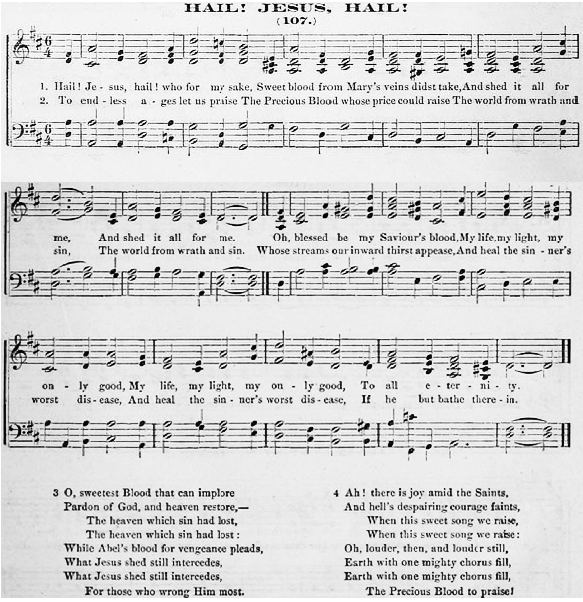
Hail! Jesus, Hail!
Laudis Corona: the new Sunday school hymn book,
containing a collection of Catholic hymns,
arranged for the principal seasons and festivals of the year
.
D. & J. Sadlier, New York, 1880. P. 170.
St. Alphonsus Liguori
1696-1787.
Translated by Father Frederick W. Faber, C.O., (1849).
1814-1863.
Vincent Novello,
1781 – 1861.
1. Hail, Jesus! Hail! who for my sake
Sweet Blood from Mary’s veins didst take,
And shed it all for me;
And shed it all for me:
O blessed be my Saviour’s Blood,
My life, my light, my only good;
My life, my light, my only good,
To all eternity.
2. To endless ages let us praise
The Precious Blood whose price could raise
The world from wrath and sin;
The world from wrath and sin.
Whose streams our inward thirst appease,
And heal the sinner’s worst disease,
If he but bathe therein.
3. O sweetest Blood, that can implore
Pardon of God, and heaven restore,
The heaven which sin had lost;
The heaven which sin had lost:
While Abel’s blood for vengeance pleads,
What Jesus shed still intercedes,
For those who wrong him most.
4. O to be sprinkled from the wells
Of Christ’s own sacred Blood, excels
Earth’s best and highest bliss,
Earth’s best and highest bliss:
The ministers of wrath divine
Hurt not the happy hearts that shine,
With those red drops of His!
5. Ah! there is joy amid the Saints,
And hell’s despairing courage faints
When this sweet song we raise,
When this sweet song we raise:
O louder then, and louder still,
Earth with one mighty chorus fill,
The Precious Blood to praise!
Amen.


This shortlink
https://www.sing-prayer.org/p/12364

Categories
Uncategorized

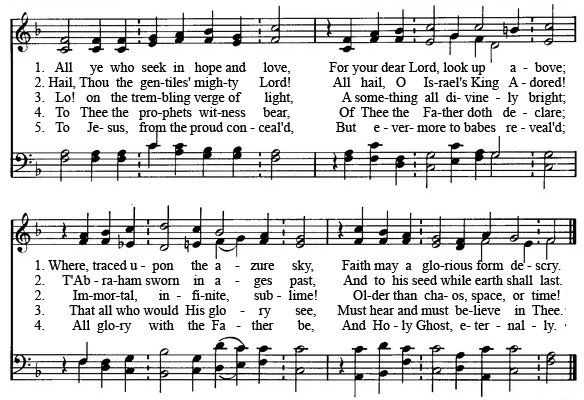
Hymn for the Transfiguration

Click the Button to sing the prayer, or play the song in a New Window

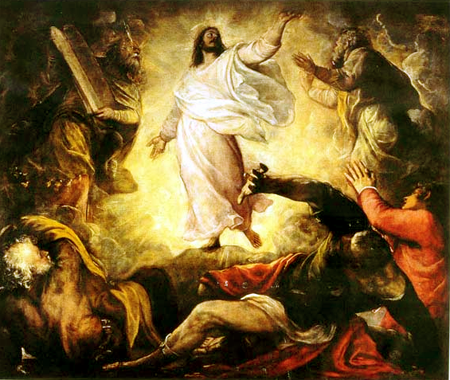
The Transfiguration
Marcus Aurelius Clemens Prudentius (348-413) Orlando Gibbons (1583 – 1625)
Song 34 (1623)
1. All ye who seek in hope and love,
For your dear Lord, look up above;
Where traced upon the azure sky,
Faith may a glorious form descry.
4. To Thee the prophets witness bear,
Of Thee the Father doth declare;
That all who would His glory see,
Must hear and must believe in Thee.
2. Hail, Thou, the gentiles’ mighty Lord!
All Hail, O Israel’s King Adored!
T’Abraham sworn in ages past,
And to his seed while earth shall last.
5. To Jesus from the proud conceal’d,
But evermore to babes reveal’d;
All glory with the Father be,
And Holy Ghost eternally.
3. Lo! on the trembling verge of light,
A something all divinely bright;
Immortal, infinite, sublime!
Older than chaos, space or time!
Amen.


This shortlink
https://www.sing-prayer.org/p/12210

Categories
Uncategorized

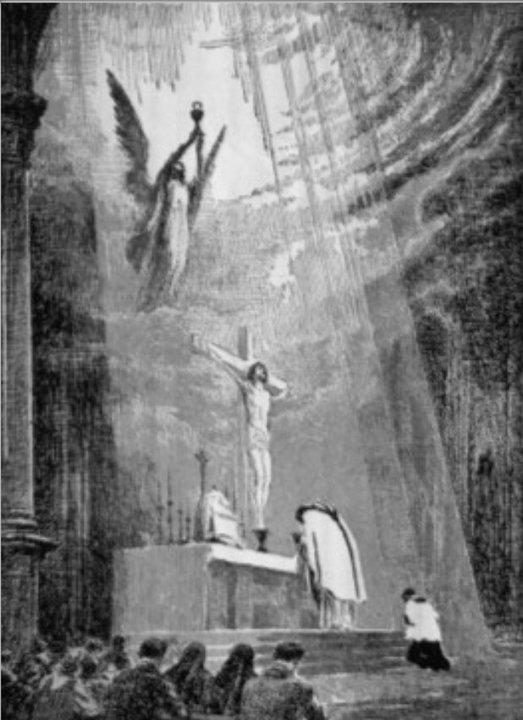
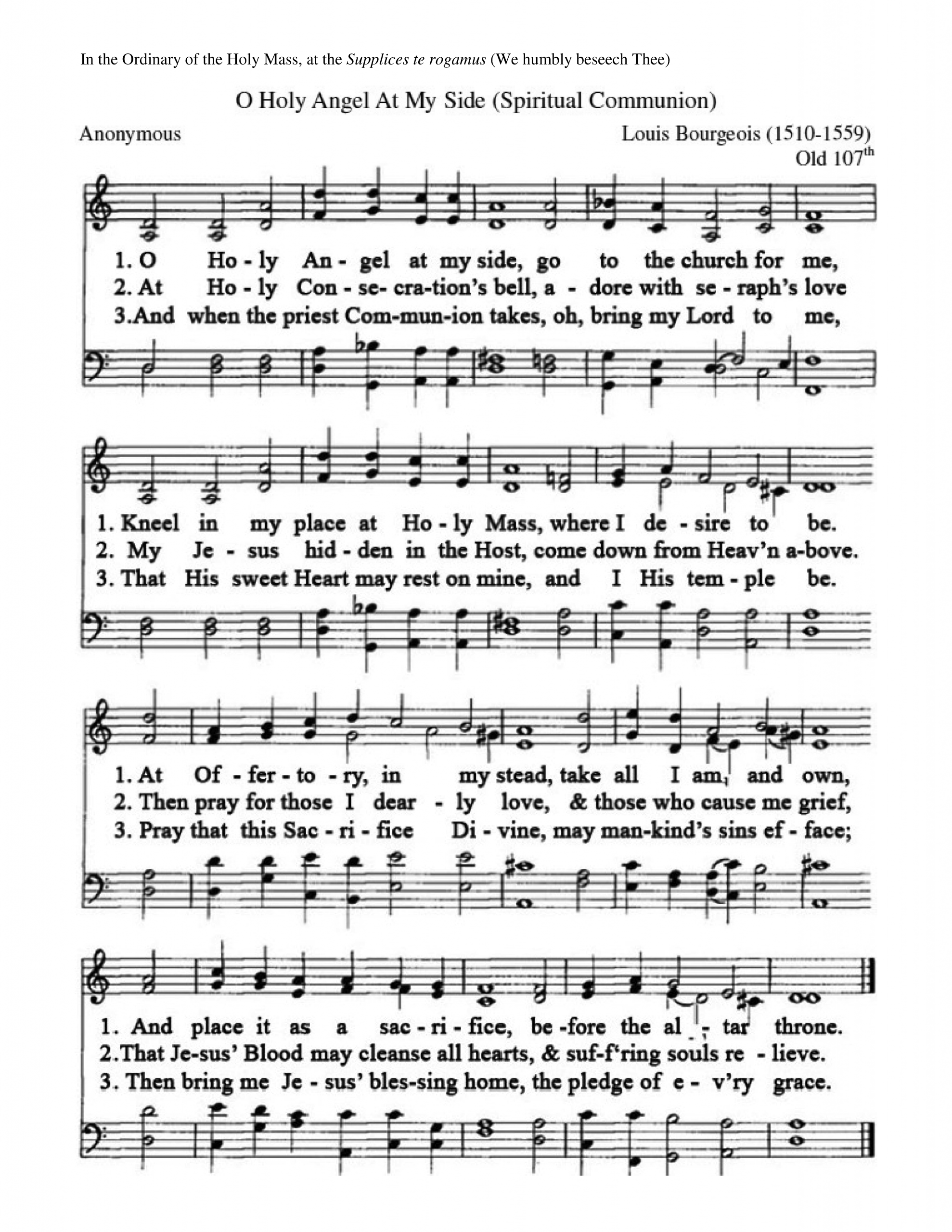
O Holy Angel at My Side (Spiritual Communion)

At the Supplices te rogamus (We humbly beseech Thee)…

O Holy Angel At My Side
Anonymous Louis Bourgeois, (1510-1559)
Old 107th
O Holy Angel at my side,
go to the church for me,
Kneel in my place at Holy Mass,
where I desire to be.
At Offertory, in my stead,
take all I am and own,
And place it as a sacrifice,
before the altar throne.
At Holy Consecration’s bell,
adore with seraph’s love
My Jesus hidden in the Host,
come down from Heav’n above.
Then pray for those I dearly love,
and those who cause me grief,
That Jesus’ Blood may cleanse all hearts,
and suffering souls relieve.
And when the priest Communion takes,
oh, bring my Lord to me,
That His sweet Heart may rest on mine,
and I His temple be.
Pray that this Sacrifice Divine,
may mankind’s sins efface;
Then bring me Jesus’ blessing home,
the pledge of every grace.
Amen.

Click the Button to sing the prayer, or play the song in a New Window


From Hymns to The Guardian Angel


This shortlink
https://www.sing-prayer.org/p/12203

Categories
Uncategorized

Latest Zika Info Lacking Balance (Retrospective)

This is a reprint from an article on a local parish, dedicated pro-life news site, “Presentation Right to Life” (presentation-r2l.org), posted on July 31, 2016.

Summary: Nobody should be careless about getting Zika. But allowing a panic to deflect attention from the most important issues is no help either.

These are Microcephaly Kids. Their Moms probably didn’t have Zika.

As you can see, they’re terrific people. I want to be with them.

If God were to send me one, I would probably learn to “wag more, bark less” from them.

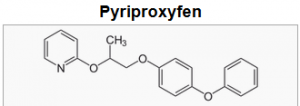
The most highly regarded American reporter, Sharyl Attkisson, reports that while Zika has been associated with increased incidences of microcephaly births, there is little evidence that the Zika infection itself directly causes the microcephaly birth defect. An insecticide that people were drinking may be the cause.

  • For 70 years, Zika wasn’t linked to microcephaly birth defects. The link was made only after a 2015 rise in microcephaly in Brazil coincident with a Zika outbreak.
  • An Argentina doctors’ group said Brazil’s rash of microcephaly was noticed shortly after some communities began using the larvicide Pyriproxyfen in drinking water. It’s a hypothesis, a probability, Dr. Medardo Avila Vazquez, a pediatrician in Cordoba, Argentina and main author of the report told NPR. And for us, its more likely that it’s the chemical larvicide and not Zika. After the report by the Argentina doctors, one Brazilian state announced it would stop putting Pyriproxyfen in drinking water. (Common pesticide may have made the Zika epidemic worse – new research.)
  • Zika is considered one of the mildest mosquito-borne viruses. More than 80% of people who get Zika don’t become sick and have no symptoms.

The image below is repeated in most Zika stories. It conveys a sense of suffering. The viewer is probably unaware that the placement of the image in the stories unconsciously links fears of having imperfect children with the crying and sense of suffering.

A perfect, beautiful child crying would convey a very different “right brain” message.


This shortlink
https://www.sing-prayer.org/p/11948

Categories
Uncategorized

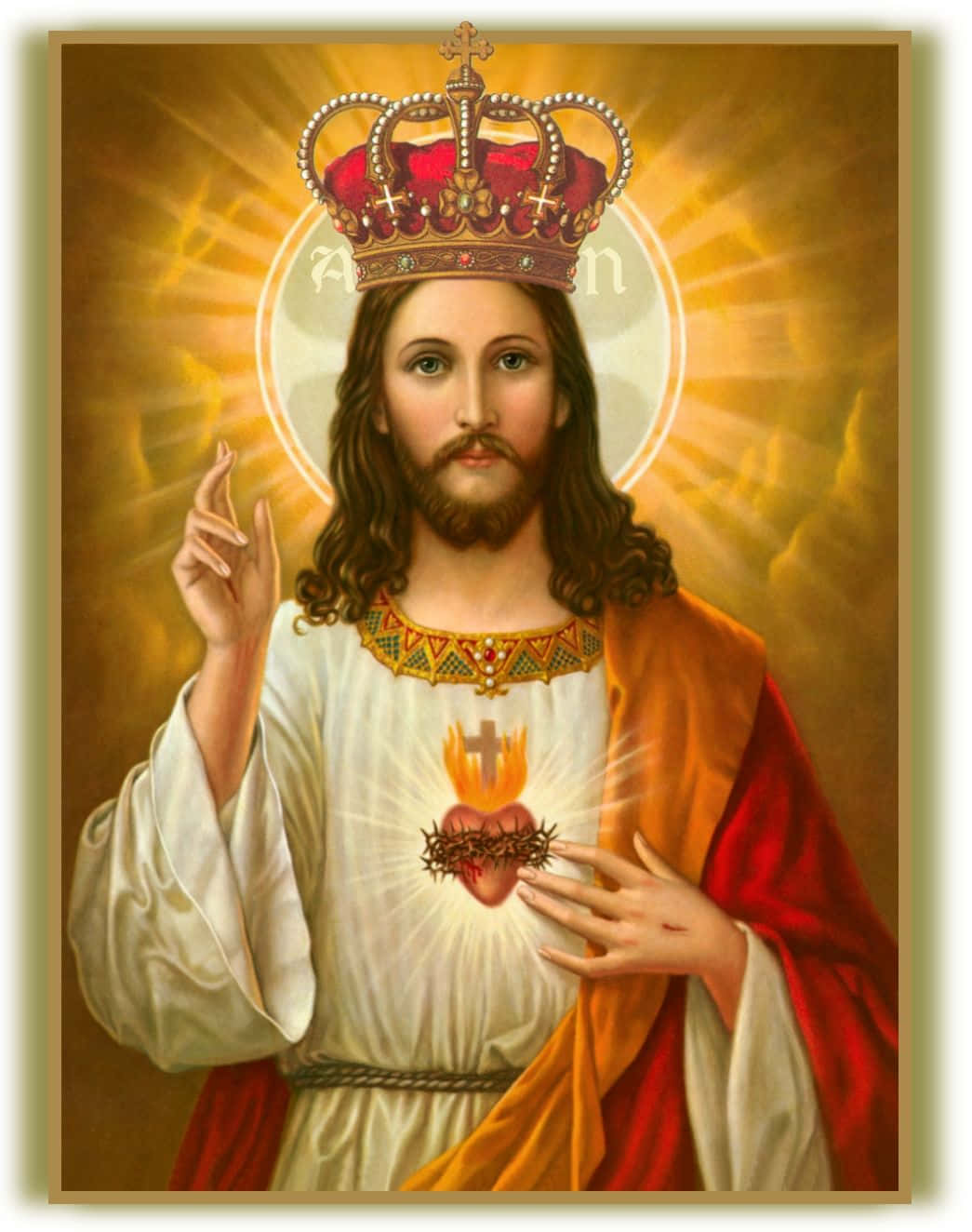
To Jesus Christ our Sovereign King

Click the Button to sing the prayer (key for Women, or play the song in a New Window

Click the Button to sing the prayer (key for Men), or play the song in a New Window

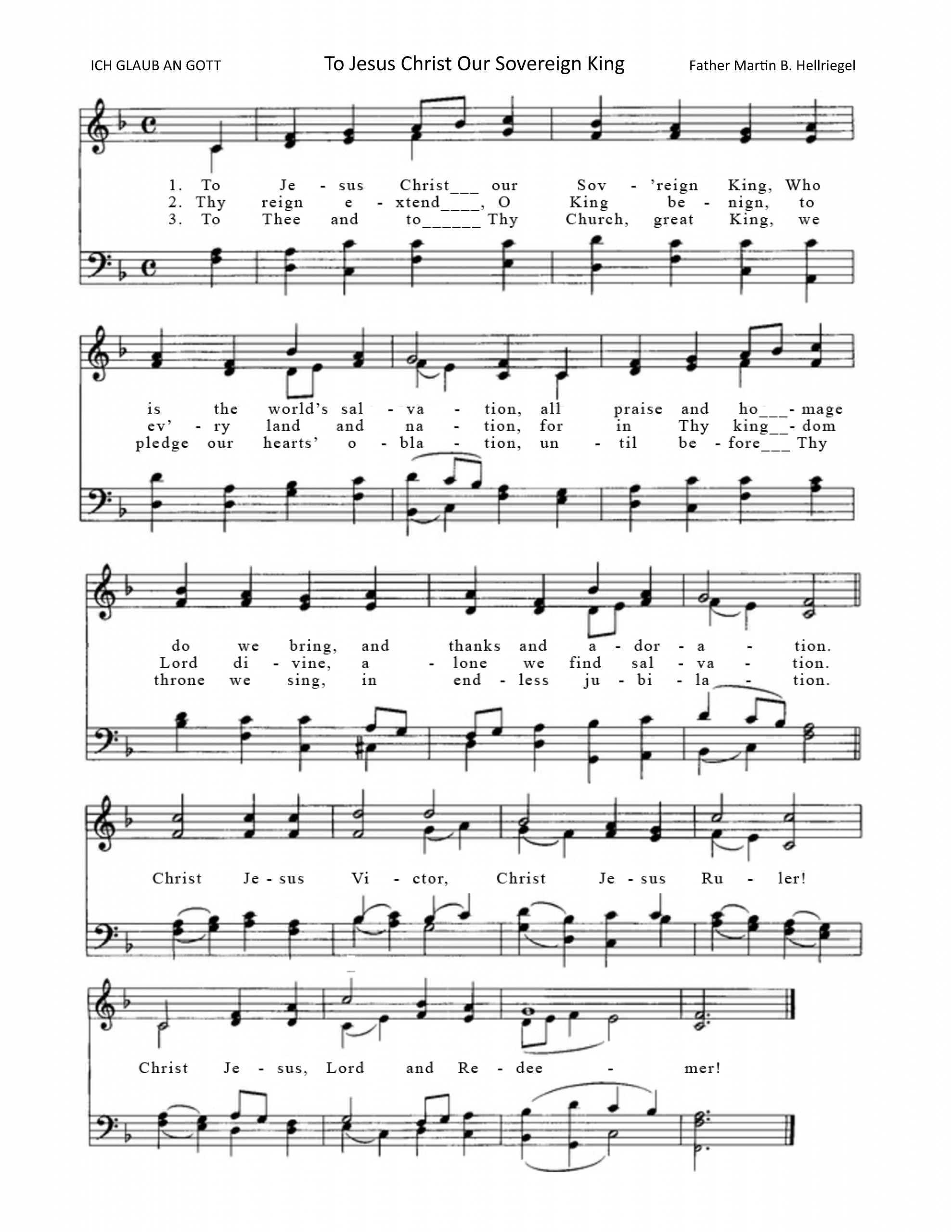
To Jesus Christ Our Sovereign King
Ich Glaub an Gott Martin B. Hellriegel
1. To Jesus Christ, our Sov’reign King,
Who is the world’s salvation,
All praise and homage do we bring,
And thanks and adoration.
Refrain:
Christ Jesus Victor, Christ Jesus Ruler!
Christ Jesus, Lord and Redeemer!
2. Thy reign extend, O King benign,
To ev’ry land and nation,
For in Thy kingdom, Lord divine,
Alone we find salvation.
(Refrain)
3. To Thee and to Thy Church, great King,
We pledge our hearts’ oblation,
Until before Thy throne we sing,
In endless jubilation.
(Refrain)

This shortlink
https://www.sing-prayer.org/p/11897

Categories
Uncategorized

Adoro Te Devote, Latin by St. Thomas Aquinas, English Approximation by Fr. Gerard Manley Hopkins


Click the Button to Hear the Song, or Play the Song in a New Window

St. Thomas Aquinas Fr. Gerard Manley Hopkins
Adoro te devote, latens Deitas,
Quæ sub his figuris vere latitas;
Tibi se cor meum totum subjicit,
Quia te contemplans totum deficit.
Godhead here in hiding, whom I do adore,
Masked by these bare shadows, shape and nothing more,
See, Lord, at Thy service low lies here a heart
Lost, all lost in wonder at the God thou art.
Visus, tactus, gustus in te fallitur,
Sed auditu solo tuto creditur.
Credo quidquid dixit Dei Filius;
Nil hoc verbo veritátis verius.
Seeing, touching, tasting are in thee deceived:
How says trusty hearing? that shall be believed;
What God’s Son has told me, take for truth I do;
Truth Himself speaks truly or there’s nothing true.
In cruce latebat sola Deitas,
At hic latet simul et Humanitas,
Ambo tamen credens atque confitens,
Peto quod petivit latro pœnitens.
On the cross Thy godhead made no sign to men,
Here Thy very manhood steals from human ken:
Both are my confession, both are my belief,
And I pray the prayer of the dying thief.
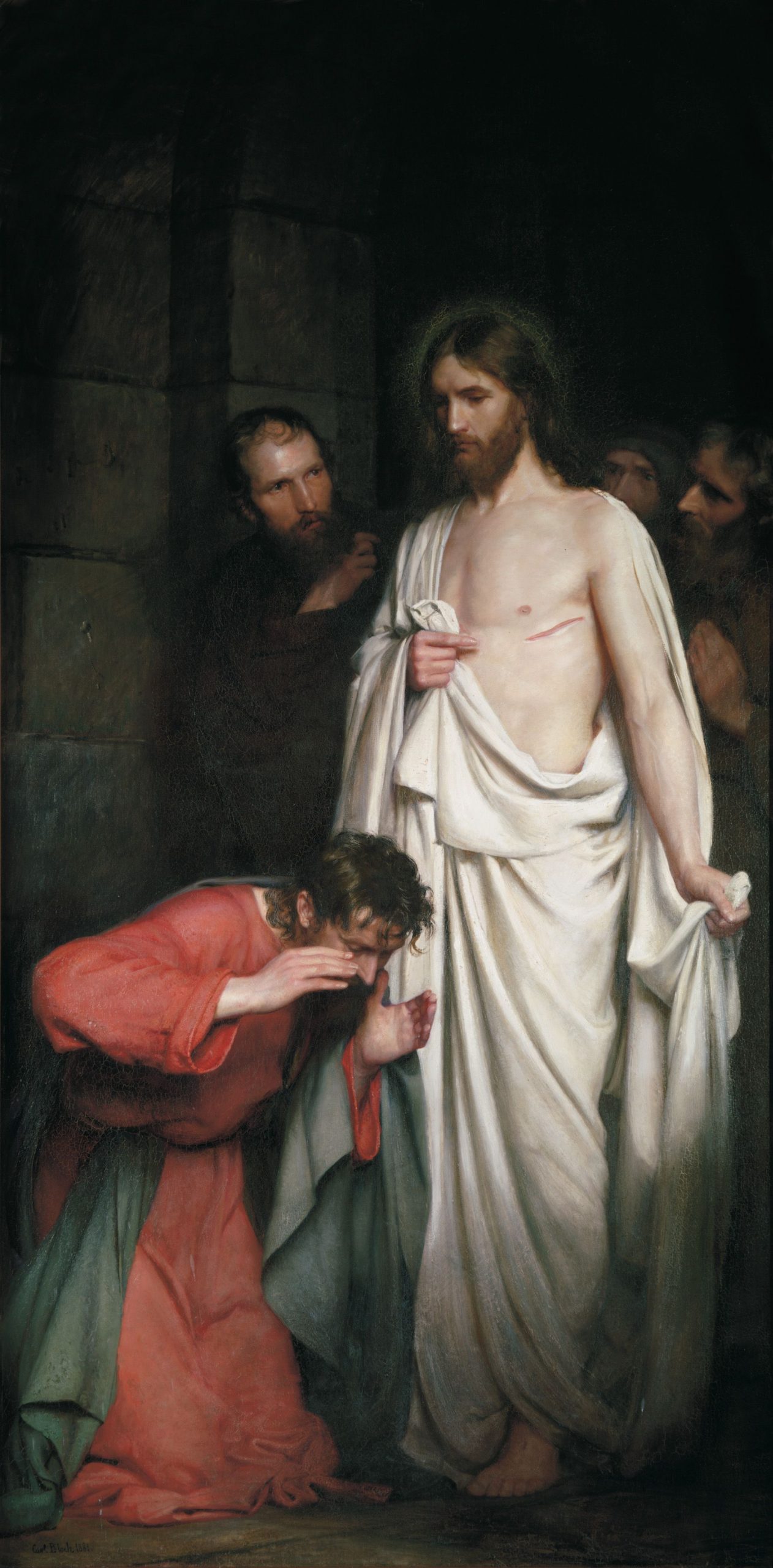
Plagas, sicut Thomas, non intueor:
Deum tamen meum te confiteor.
Fac me tibi semper magis credere,
In te spem habere, te diligere.
I am not like Thomas, wounds I cannot see,
But can plainly call thee Lord and God as he;
Let me to a deeper faith daily nearer move,
Daily make me harder hope and dearer love.
O memoriale mortis Domini!
Panis vivus, vitam præstans homini!
Præsta meæ menti de te vívere,
Et te illi semper dulce sapere.
O thou our reminder of Christ crucified,
Living Bread, the life of us for whom he died,
Lend this life to me then: feed and feast my mind,
There be thou the sweetness man was meant to find.
Pie Pelicane, Jesu Domine,
Me immundum munda tuo sanguine:
Cujus una stilla salvum facere
Totum mundum quit ab omni scelere.
Bring the tender tale true of the Pelican;
Bathe me, Jesu Lord, in what Thy bosom ran
Blood whereof a single drop has power to win
All the world forgiveness of its world of sin.
Jesu, quem velatum nunc aspicio,
Oro, fiat illud quod tam sitio:
Ut te revelata cernens facie,
Visu sim beátus tuæ gloriæ. Amen
Jesu, whom I look at shrouded here below,
I beseech thee send me what I thirst for so,
Some day to gaze on thee face to face in light
And be blest for ever with Thy glory’s sight. Amen.


This shortlink
https://www.sing-prayer.org/p/11364

Categories
Uncategorized

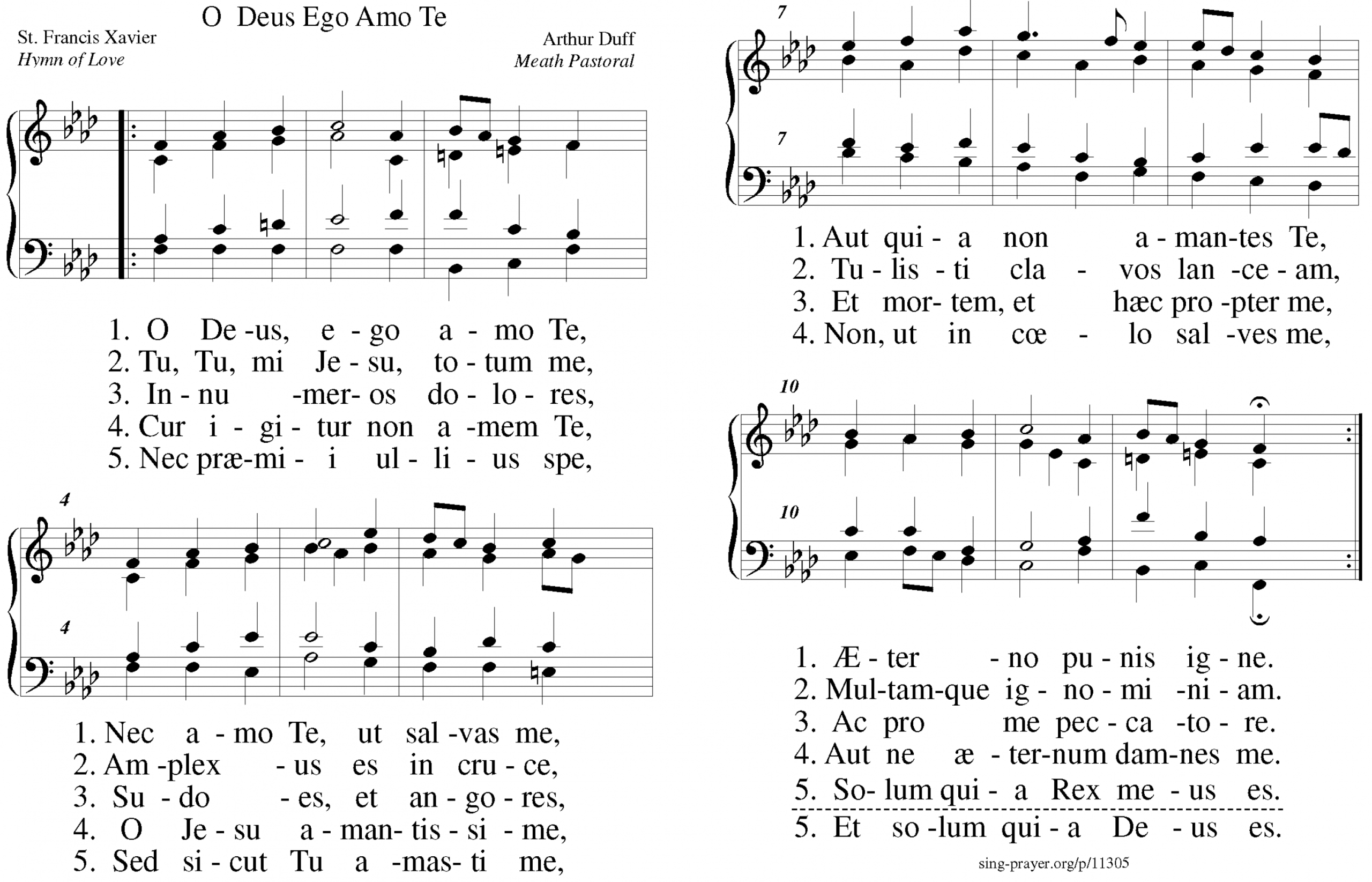
`O Deus Ego Amo Te` by St. Francis Xavier

This print object has a dedicated resource URL
https://www.sing-prayer.org/p/11308


This shortlink
https://www.sing-prayer.org/p/11305

Categories
Uncategorized

Fr. Ripperger: “Traditional Catholics” Who Fail Regularly to Study Their Faith Are Functionally Afflicted with Modernism


20:13″ of 59:16″

“Oh, but I studied the Baltimore Catechism before receiving my First Holy Communion”.

That’s good.

“When I was a child, I spoke as a child, I understood as a child, I thought as a child. But, when I became a man, I put away the things of a child.” First Corinthians 13:11

We are bound on Sunday to abstain from servile work and to assist at the public Mass; we ought moreover to employ this day in providing for the salvation of our soul, that is to say by approaching the Sacraments, by prayer, hearing sermons, reading spiritual books, and performing works of mercy.

A most profitable form of “reading spiritual books” is to continue thoroughly studying our catechism.

Our site has “The Catechism Explained by Fr. Francis Spirago (1899)” with the table of contents and detailed link-clicks to drill down into the relevant sections.

If you will spend this time profitably, you will be amazed at what you learn, that which you hadn’t previously known.

Fr. Francis Spirago

This shortlink
https://www.sing-prayer.org/p/10777